
Have you ever wondered what keeps your favorite websites running 24/7? Every time you stream a movie, send an email, or shop online, you’re connecting to a massive digital powerhouse called a data center.
Data centers consist of three primary component types: computing resources (servers), storage systems, and networking equipment, all supported by critical infrastructure including power, cooling, security, fire suppression, and physical housing systems that work together to process, store, and distribute data reliably.
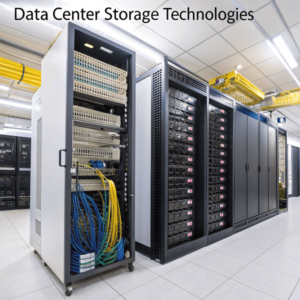
Understanding daUnderstanding data center components is essential for businesses considering cloud services56 or building their own infrastructure.
Data center infrastructure consists of five core elements that are critical to operation and maintenance: Power, Cooling, Network, Security, and Space. Each component plays an important role in overall performance.
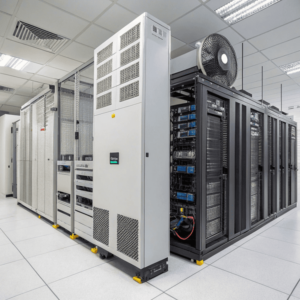
Power Systems
Data centers require a reliable and efficient power supply to keep their systems running 24/7. This includes primary power distribution, uninterruptible power supplies (UPS), backup generators, and power monitoring systems. Power density can range from a few kW for a rack of servers to several tens of MW for large facilities.
Cooling Infrastructure
Data centers generate a lot of heat, so it’s essential to have a good cooling system in place to prevent overheating. Modern cooling solutions include traditional air conditioning, ventilation, cooling systems, and advanced liquid cooling systems for high-density applications.
Network Connectivity
A data center needs a reliable and high-speed network to connect its systems and users. This encompasses both internal networking between servers and external connectivity to the internet and other data centers.
Security Framework
Data centers are a major target for cyberattacks, so it’s important to have a strong security system in place. Security includes both physical access controls and cybersecurity measures like firewalls and intrusion detection systems.
Physical Space Management
As your business grows, you’ll need to have the space to expand your data center. This includes the building structure, server racks, cable management, and layout optimization for efficiency and growth.
What is the structure of a data center?
Think of a data center structure like the layout of a modern manufacturing plant – everything must be precisely organized for maximum efficiency and reliability.
A data center’s design is based on a network of computing and storage resources that enable the delivery of shared applications and data. The key components include routers, switches, firewalls, storage systems, servers, and application-delivery controllers.
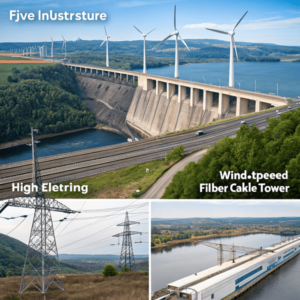
Data center infrastructure creates three essential layers:
| Layer | Components | Function |
|---|---|---|
| Compute Layer | Servers that provide processing, memory, local storage, and network connectivity | Run applications and process data |
| Storage Layer | Storage systems used to hold valuable data | Store and manage information |
| Network Layer | Connects servers, data center services, storage, and external connectivity | Enable communication |
Computing Infrastructure
Servers are the engines of the data center. On servers, the processing and memory used to run applications may be physical, virtualized, distributed across containers, or distributed among remote nodes. Modern servers come in different form factors including blade, rackmount, and tower configurations.
Storage Architecture
Storage systems, such as solid-state drives (SSDs) and storage area networks (SANs), are vital in protecting against data loss while preserving data integrity. Storage solutions include storage area networks (SANs), network attached storage (NAS), and direct attached storage (DAS).
Supporting Infrastructure
Beyond the core computing elements, support infrastructure is essential to meeting the service level agreements of an enterprise data center. This includes cabling, such as copper and fiber optic cables, that enables high-speed data transmission between devices, along with racks, enclosures and cabinets used to store and protect equipment.
What are the four types of data centers?
Just as mold manufacturing can range from small shops to massive production facilities, data centers come in different sizes and ownership models to meet various business needs.
Data centers vary significantly, ranging from small server rooms to groups of geographically distributed buildings, evolving from on-premises infrastructure to hybrid systems connecting on-premises with cloud infrastructures.
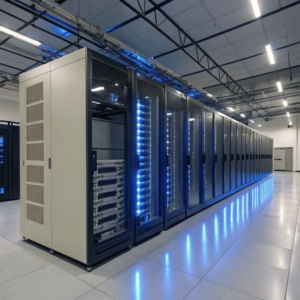
The four main data center types serve different organizational needs:
Enterprise Data Centers
Enterprise data centers are typically constructed and used by a single organization for their own internal purposes56
Each type offers distinct advantages based on control requirements, budget constraints, scalability needs, and performance demands. The choice depends on your organization’s specific technical and business requirements.
Conclusion
Data centers are complex ecosystems of interconnected components that power our digital world through carefully orchestrated infrastructure elements.