
Many people assume all modern storage relies on magnets. Actually, solid state drives (SSDs) do not use any magnets for storing or reading data.
SSDs do not use magnets. Unlike traditional hard disk drives, SSDs store data with integrated circuits and flash memory, completely avoiding magnetic fields for operation.
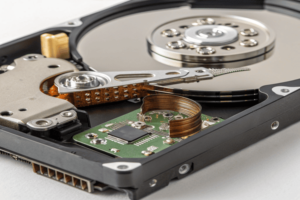
This surprises those familiar with classic hard drives, where magnets are essential for reading and writing. SSDs work differently and bring big benefits because they skip SSDs23 work differently and bring big benefits because they skip magnetic technology
SSDs do not use magnets at all. They rely on semiconductor memory—typically NAND or NOR flash chips—using electrical charges to represent and store information.
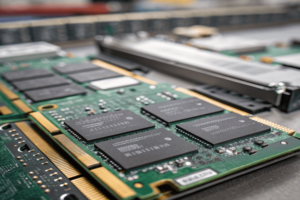
When you look inside an SSD, you see circuit boards, chips, and controllers. There are no spinning platters, no moving heads, and zero magnets. The core technology behind SSDs is floating-gate transistors, which are tiny switches that trap electrons inside cells to store digital bits. These electrons stay put until you erase or overwrite them. All operations are controlled by voltages sent through electrical circuits; there are no magnetic fields involved.
Even the connectors, shielding, and cables for SSDs use ordinary materials—and not magnetic metals. SSDs withstand strong magnetic fields without being damaged, making them ideal for sensitive environments and travel or transport. The separation from magnetic technology sets SSDs apart from older drives and is a reason for their reliability in modern electronics.
SSD Core Storage Technology
| Feature | SSD Details | Used in HDD? |
|---|---|---|
| Magnets | No | Yes |
| Semiconductor Memory | Yes, NAND/NOR flash | No |
| Moving Parts | No | Yes |
| Electrical Charge | Yes | No |
| Data Erase Method | Voltage-controlled flash | Magnetic head |
| Susceptible to Magnet | No | Yes |
Are magnets used in hard drives?
Hard drives—also called HDDs—have a completely different design from SSDs, and magnets are at the heart of their function.
Hard disk drives rely on strong, permanent magnets to move the read/write heads and to help store and retrieve data from spinning magnetic platters.
Hard drives use two main magnetic systems. First, the platters are coated with a the platters are coated with a magnetic material that stores data23 as tiny north or south poles
Because of this magnetic mechanism, hard drives are sensitive to magnetic fields. Bringing a strong magnet close to a hard drive can wipe or corrupt data, and the drive can lose information or malfunction if exposed to electromagnetic interference.
This dependence on magnetic systems is why hard drives make noise (the actuator arm moves fast) and why they wear out after long use. The mechanical nature and magnet reliance make them less rugged than SSDs. When comparing these two storage types, the presence of magnets is a major difference.
Magnetic Hard Drive Table
| Component | Magnetic Role | What Happens |
|---|---|---|
| Platters | Store data in domains | Data recorded |
| Actuator Magnets | Move heads | Locates data |
| Read/Write Heads | Detect/write magnetism | Reads/writes |
| Susceptibility | Sensitive to magnets | Data at risk |
Is SSD hard drive magnetic, optical, or solid state?
SSDs are part of a different category from both magnetic and optical drives. Solid state is their defining trait.
SSDs are solid state devices, not magnetic or optical. They store data by trapping electrical charges within semiconductor memory cells—no magnets, lasers, or moving parts involved.
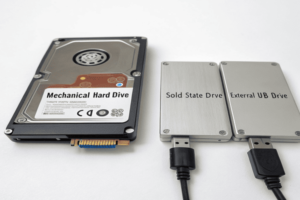
SSDs are called "solid state" because they use solid electronic components—flash chips and controllers—instead of moving mechanical parts or media. Magnetic drives rely on spinning platters and heads, while optical drives use lasers to read and write information on discs.
Solid state drives are reliable and silent. They work fast because all data moves electrically. This makes them robust against vibration, temperature change, and strong magnets—ideal for laptops, portable gear, and high-demand servers.
Optical drives (like DVD or Blu-ray) use lasers. Magnetic drives use metal platters and magnets. SSDs use silicon-based chips and voltage differences. These differences show why SSDs became popular so quickly—as they combine speed with durability and freedom from the risks of magnets or physical wear.
Storage Type Comparison Table
| Type | Core Method | Moving Parts | Vulnerable to Magnet | Reliability |
|---|---|---|---|---|
| Solid State | Electrical | No | No | High |
| Magnetic | Magnetism | Yes | Yes | Medium |
| Optical | Laser Light | Yes | No | Medium |
Conclusion
SSDs use solid-state electronics—never magnets—for storing data. They are different from both magnetic and optical drives, bringing speed and reliability to modern computers.
-
Exploring this topic will reveal the fascinating mechanisms behind data storage in various devices.
that stores data as tiny north or south poles. The read/write heads float above the platters, changing and sensing these magnetic signals to write or read each bit. Second, powerful neodymium magnets control the movement of the actuator arm, precisely guiding the heads over the platters. ↩ ↩