
Having worked with storage solutions for years in the mold design industry, I’ve encountered numerous Having worked with storage solutions6 for years in the mold design industry, I’ve encountered numerous SSD types across different projects
SSDs come in multiple form factors including 2.5", M.2, mSATA, U.2, U.3, E1.S, E1.L, E3.S, and E3.L, each designed for specific applications from consumer laptops to enterprise data centers [1][3].
The SSD landscape has evolved dramatically from simple storage replacements to specialized solutions for every computing environment. Each type serves distinct purposes and performance requirements.
Are all SSDs external?
This misconception stems from confusion betweenThis misconception stems from confusion between form factors and installation methods6
Most SSDs are internal components designed to be installed inside computers, with external SSDs representing just one category of the broader SSD market [1].
The primary SSD types are predominantly internal form factors. The 2.5" SSD is the most common type and fits into most laptops or desktops, connecting via SATA cables for a familiar installation experience [1]. M.2 SSDs have become the standard for slim laptops and notebooks, installing directly onto the motherboard with their tiny form factor often compared to a stick of gum [1].
Internal SSD Form Factors
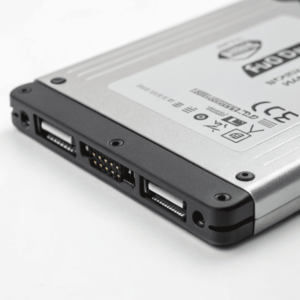
2.5" SSDs: These resemble traditional hard drives and are widely compatible with most laptops and desktops, using SATA technology and protocol [1][3]. They mount into standard drive bays and serve as direct replacements for HDDs.
M.2 SSDs: Available in various lengths to accommodate different capacities, these install directly on motherboards [1]. Using NVMe technology with PCIe protocol, they offer much higher data transfer speeds over 2.5" SSDs while maintaining a much smaller footprint [3].
mSATA SSDs: Representing a smaller version of full-size SATA SSDs, these are found in laptops and industrial applications like digital signage and point-of-sale devices [1][3]. They consume less power and have a maximum bandwidth of 6 gigabits per second.
Enterprise Form Factors: U.2 and U.3 SSDs are designed specifically for enterprise and data center environments [3]. The newer EDSFF family includes E1.S, E1.L, E3.S, and E3.L form factors, bringing consolidation and flexibility to data center markets [3].
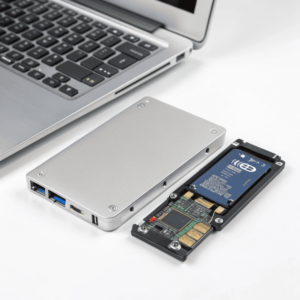
External SSDs exist as a separate category, typically housing internal SSD technology within protective enclosures with USB, USB-C, or Thunderbolt connections. These serve portable storage needs rather than primary system storage.
Are there 10 TB SSDs?
Yes, high-capacity SSDs reaching Yes, high-capacity SSDs6 reaching 10TB and beyond are available, though they’re primarily targeted at enterprise and professional markets rather than consumer applications
10TB SSDs exist primarily in enterprise form factors like U.2, U.3, and newer EDSFF designs, with some consumer M.2 drives approaching these capacities at premium pricing.
The path to 10TB capacity involves different approaches depending on the form factor. M.2 SSDs achieve higher capacities by using longer form factors – the longer the drive, the more NAND flash chips can be mounted, leading to higher capacity drives [1]. Enterprise U.2 and U.3 form factors, designed specifically for data center environments, commonly offer these ultra-high capacities [3].
Capacity Scaling by Form Factor
Consumer M.2 SSDs: Currently reach up to 4TB in mainstream products, with 8TB models available from select manufacturers. The physical constraints of the M.2 2280 form factor limit how many NAND chips can be accommodated.
Enterprise U.2/U.3: These 2.5" form factor drives with thicker profiles accommodate more storage chips and advanced controllers. Capacities of 7.68TB, 15.36TB, and even 30TB are available from enterprise vendors.
EDSFF Form Factors: The newer E1.L and E3.L designs, described as ruler form factors for denser storage environments, push capacity boundaries even further [3]. These are specifically engineered for systems requiring maximum capacity per slot.
The cost per terabyte drops significantly in enterprise drives, but these require compatible server hardware with proper cooling and power delivery. Consumer systems typically cannot accommodate the largest capacity drives due to thermal and power constraints.
For most professional applications, including complex mold design workflows, 2TB to 4TB M.2 SSDs provide excellent balance between capacity, performance, and system compatibility.
Is solid state drive the same as SSD?
This question touches on terminology that often confuses newcomers to storage technology. The terms are identical – SSD is simply the acronym for Solid State Drive, just as HDD stands for Hard Disk Drive.
SSD is the acronym for Solid State Drive, making the terms completely interchangeable – they refer to the exact same storage technology using NAND flash memory chips.
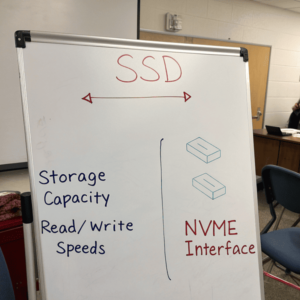
The confusion sometimes arises because people encounter both terms in different contexts. Technical documentation might use "solid state drive" in full, while marketing materials and casual conversation typically use "SSD." Both describe storage devices that use NAND flash memory instead of spinning mechanical components [1].
Understanding SSD Technology Components
NAND Flash Memory: The core storage medium in all SSDs, whether called solid state drives or SSDs. This non-volatile memory retains data without power and comes in various types including SLC, MLC, TLC, and QLC configurations.
Controllers: Every SSD contains sophisticated controllers that manage data placement, wear leveling, error correction, and communication with the host system. These operate identically regardless of whether you call the device an SSD or solid state drive.
Form Factor Variations: The same underlying solid state drive technology appears in multiple physical formats [1][3]. Whether discussing 2.5" solid state drives, M.2 SSDs, or enterprise U.2 drives, the fundamental technology remains consistent.
The interface protocols – SATA, NVMe, PCIe – work the same way whether you reference them as SSD interfaces orThe interface protocols – SATA, NVMe, PCIe – work the same way whether you reference them as SSD interfaces6 or solid state drive interfaces.
Some manufacturers might prefer one term over another for branding purposes, but this doesn’t indicate any technological differences. High-end gaming SSDs and enterprise solid state drives use the same basic architecture, with variations in controller sophistication, NAND quality, and performance optimization.
Conclusion
SSD technology encompasses diverse form factors and capacities, from compact M.2 drives to massive enterprise solutions, all sharing the same fundamental solid state storage principles.