

Configuring a 2TB RAM node often surfaces when data pip […]
Configuring a 2TB RAM node often surfaces when data pipelines stall and virtualization clusters face severe memory starvation. When standard infrastructure hits physical limits, engineers scramble to find viable high-density solutions without blowing project budgets. Deploying 2TB of system memory is fully viable, but doing so requires enterprise server platforms rather than standard commercial computing architectures.
Yes, 2TB RAM is entirely possible, but it requires enterprise-grade multi-socket server hardware using registered ECC memory (RDIMMs or 3DS RDIMMs). While impossible on consumer desktops, standard dual-socket AMD EPYC or Intel Xeon Scalable platforms achieve 2TB easily across 16 or 32 memory slots using 64GB, 128GB, or 256GB modules.
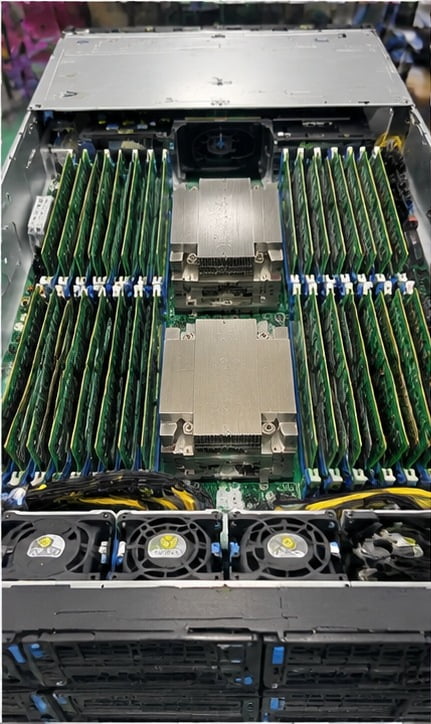
During pre-sales scoping sessions with systems integrators, I frequently see teams treat memory capacity like an isolated upgrade slider. Moving into multi-terabyte territory introduces architectural tradeoffs, non-linear DIMM price spikes, and thermal realities that dictate your total cost of ownership. Let us explore the engineering requirements.
Which platforms can physically support a 2TB RAM server?
Sourcing hardware for extreme memory density creates significant confusion during early procurement. If you specify the wrong processor tier or motherboard form factor, your platform simply cannot map multi-terabyte physical address spaces. Choosing the right socket topology and certified enterprise processor family solves this architectural limitation immediately.
Achieving a 2TB RAM footprint requires an enterprise platform with high slot counts and multi-channel memory controllers. Dual-socket Intel Xeon Scalable and AMD EPYC servers readily support 2TB across 16 to 32 DIMM slots using registered ECC DDR4 or DDR5 modules, whereas consumer and standard workstation chipsets cap out far lower.
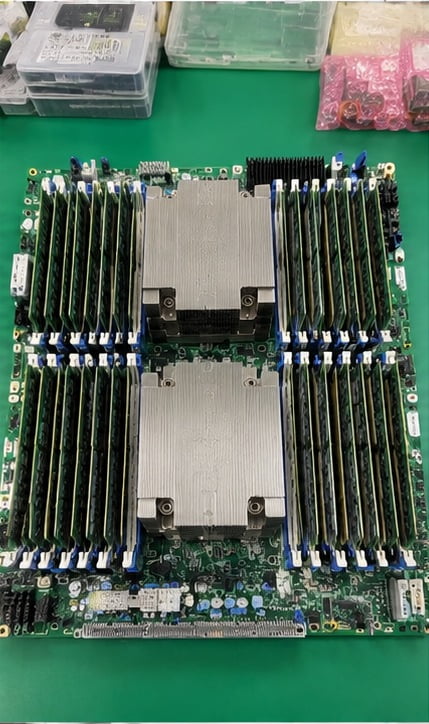
Enterprise Sockets vs. Consumer Architectures
When prospective clients ask me if they can build an ultra-dense workstation for local computing, I always begin by drawing the architectural line between consumer and enterprise silicon. Consumer processors (such as standard desktop lines) feature two physical memory channels supporting two DIMMs per channel (2DPC), creating a hard cap of four slots. With standard unbuffered DDR5 modules topping out at 32GB to 48GB per stick, these boards hit a ceiling at 128GB or 192GB[^1].
To achieve 2TB, the system requires enterprise platform architecture:
- Enterprise Memory Channels: Modern enterprise processors feature 8-channel (Intel Xeon 4th/5th Gen) or 12-channel (AMD EPYC 9004 series) memory subsystems per CPU[^2].
- Registered Memory Support: Enterprise silicon enforces Registered DIMMs (RDIMMs) or Load-Reduced DIMMs (LRDIMMs). The onboard register isolates the memory controller from electrical bus loading[^3], enabling dozens of high-capacity chips to operate without signal degradation.
- Extended Physical Addressing: Enterprise CPU instruction sets support wide physical address buses[^4] capable of addressing terabytes of volatile memory across split NUMA nodes.
| Platform Type | Typical Sockets | Memory Channels | Maximum DIMM Slots | Feasibility for 2TB RAM |
|---|---|---|---|---|
| Consumer Desktop | 1 | 2 | 4 | Impossible (Caps at 128–192GB) |
| Pro Workstation | 1 | 4 or 8 | 8 | Edge Case (Requires rare, costly 256GB DIMMs) |
| Single-Socket Server | 1 | 8 or 12 | 12 to 16 | Feasible (Using 128GB or 256GB RDIMMs) |
| Dual-Socket Server | 2 | 16 to 24 | 16 to 32 | Standard (Cost-effective using 64GB/128GB RDIMMs) |
For most data center deployments, a dual-socket 2U rackmount platform provides the most stable and balanced layout for reaching 2TB. It spreads thermal loads evenly and avoids the extreme price premiums of ultra-dense individual memory modules.
What is the real cost of deploying 2TB RAM in enterprise hardware?
Budgeting for high-density compute nodes often triggers sticker shock when formal quotes arrive. System architects frequently assume that four 64GB modules scale at the exact same per-gigabyte price as a single 256GB module. Understanding density pricing curves prevents severe procurement delays and protects capital expenditure budgets.
The financial cost of 2TB RAM depends heavily on individual module density. Populating thirty-two 64GB RDIMMs offers the most cost-effective per-gigabyte price, whereas using eight or sixteen high-density 128GB or 256GB 3DS RDIMMs causes an exponential, non-linear pricing premium due to complex through-silicon via (TSV) manufacturing yields.
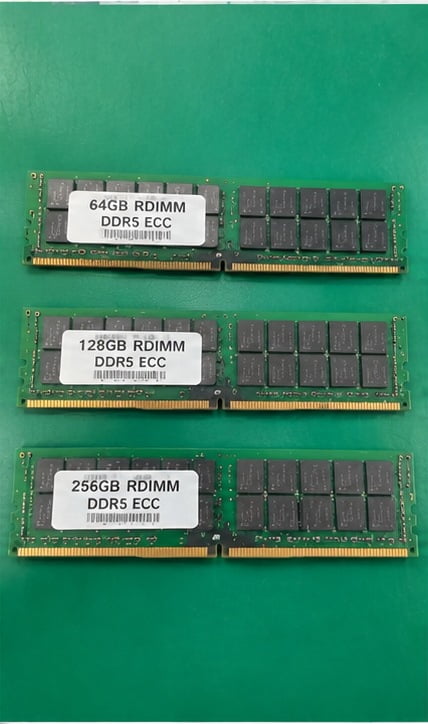
The DIMM Density Curve
During bill-of-materials (BOM) evaluations with system integrators, memory modules often represent 40% to 60% of the entire node cost. Memory manufacturers price high-density modules along an aggressive curve. When you step past mainstream monolithic die capacities, silicon fabrication requires 3D stacked dies (3DS) using Through-Silicon Vias[^5]. This manufacturing complexity drives prices upward quickly.
Consider the three primary approaches to building 2TB:
- High Slot Count, Lower Density (32 × 64GB RDIMMs): This configuration delivers the lowest cost per gigabyte. Standard 64GB DDR4 and DDR5 modules are produced in massive volumes. However, it requires a dual-socket chassis with 32 physical DIMM slots, occupying valuable motherboard real estate.
- Balanced Configuration (16 × 128GB RDIMMs): This setup suits dual-socket platforms with 16 slots or single-socket platforms with 16 slots (1 DIMM per channel on 12-channel AMD or 2DPC on 8-channel platforms). The cost per gigabyte is higher than 64GB sticks, but it preserves future expansion headroom.
- Low Slot Count, Extreme Density (8 × 256GB 3DS RDIMMs): This route carries the highest procurement cost. 256GB modules trade economic efficiency for extreme density, typically reserved for specialized 4-socket or 8-socket mission-critical systems.
Relative Cost Index (Illustrative Enterprise Memory Scaling):
32 x 64GB  (2TB Total)  [$$$$]                 (Base baseline / most economical)
16 x 128GB (2TB Total)  [$$$$$$$]              (~30-50% overall memory premium)
8 x 256GB  (2TB Total)  [$$$$$$$$$$$$$$$$$$$$] (~120-200% premium due to 3DS packaging)
Beyond the initial purchase price, power and thermal management enter the equation. Thirty-two active DIMMs draw between 200W and 350W under sustained load[^6] just for the memory subsystem. Your server chassis must have adequate fan static pressure and redundant power supply unit (PSU) capacity to prevent thermal throttling.
Does your workload actually require 2TB RAM instead of clustering?
Scaling hardware vertically by adding memory seems simpler than redesigning software stacks for distributed computing. However, pouring capital into massive single-node memory pools without validating workload profiles leads to underutilized compute cycles and single points of failure. Evaluating software architecture first guarantees an optimized return on infrastructure investment.
Workloads like in-memory databases (SAP HANA, Redis), massive virtualization clusters, and large-scale scientific simulations genuinely benefit from a single 2TB RAM node. Conversely, microservices and stateless applications operate far more cost-effectively and resiliently across multiple distributed, smaller nodes running clustered orchestration frameworks.
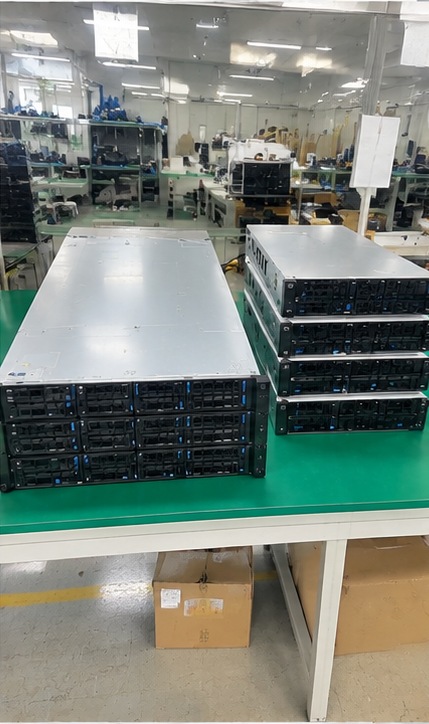
True Candidates for Monolithic 2TB Nodes
In our pre-sales scoping sessions, I always ask engineers one foundational question: Can your software actually address and utilize shared memory across NUMA domains efficiently? Certain workloads justify a single massive footprint:
- In-Memory Analytics and Relational Databases: Engines like SAP HANA, Oracle Database In-Memory, and large-scale Memcached or Redis instances run real-time queries against entire dataset tables loaded into RAM. Splitting these across network nodes introduces inter-switch latency penalties that degrade throughput[^7].
- High-Density Hypervisors (VMware ESXi, Proxmox VE, KVM): Virtualization environments hosting dozens of enterprise virtual machines frequently hit memory saturation long before CPU cores reach full utilization. A 2TB RAM node allows high VM consolidation ratios per rack unit, reducing software licensing fees calculated per physical CPU socket[^8].
- Scientific Simulation and In-Memory Graph Processing: Finite element analysis, computational fluid dynamics (CFD), and genomic mapping process immense dataset matrices that must fit within contiguous volatile storage to complete calculations in acceptable timeframes.
When Clustering Wins
If your architecture runs stateless containers, Kubernetes clusters, or horizontally scalable web microservices, scaling vertically to 2TB RAM creates operational risk. If a single 2TB node experiences a hardware interrupt or memory parity failure, the blast radius takes down the entire application pool.
Deploying four independent nodes with 512GB RAM each provides superior high availability, straightforward maintenance windows, and lower overall component replacement costs compared to maintaining an oversized single node.
How do memory topology and channel saturation impact 2TB RAM stability?
Achieving system stability on dense memory platforms requires more than simply snapping sticks into vacant slots. If you overlook memory channel saturation and NUMA balancing, your server will experience memory clock throttling and severe latency bottlenecks. Careful configuration of platform topology ensures consistent throughput and predictable production performance.
Memory topology directly governs bus frequency and access latency in high-capacity builds. Running two DIMMs per channel (2DPC) often forces memory controllers to downclock operating speeds (such as dropping from 4800 MT/s to 4000 MT/s), while uneven module placement across NUMA nodes causes severe processor bus contention.
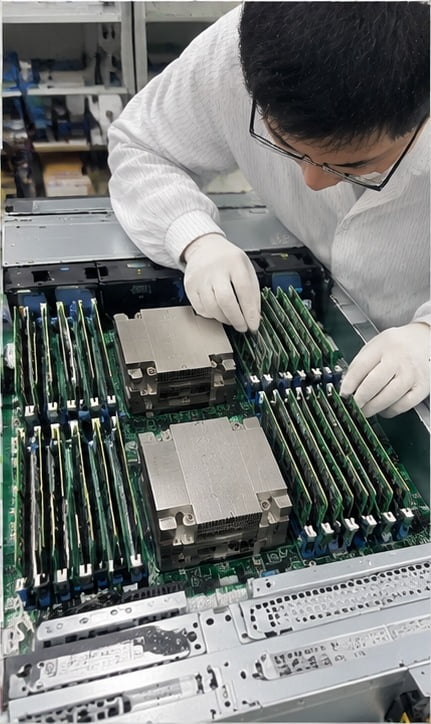
Understanding the 1DPC vs. 2DPC Penalty
Memory bus signaling operates at strict electrical tolerances. When you populate one DIMM per channel (1DPC), modern DDR5 platforms achieve rated speeds up to 4800 MT/s or 5600 MT/s. However, when you fill every slot in a 32-DIMM dual-socket chassis, you move to two DIMMs per channel (2DPC).
Adding a second electrical load to each channel increases bus trace capacitance[^9]. To preserve signal integrity and avoid uncorrectable multi-bit ECC errors, server system BIOS will automatically downclock memory bus frequency.
Integration Note: In DDR5 dual-socket platforms, populating 2DPC to hit 2TB can reduce your operational frequency from 4800 MT/s down to 4000 MT/s or 3600 MT/s[^10] depending on whether modules are single-rank, dual-rank, or quad-rank. Verify platform compatibility matrices before finalizing target throughput figures.
Balancing NUMA Topologies
Every multi-socket server divides its physical resources into Non-Uniform Memory Access (NUMA) domains. Each processor socket manages its own local memory controller and assigned DIMM slots.
When planning a 2TB installation, symmetry is mandatory:
- Symmetrical Socket Allocation: In a dual-socket build, allocate exactly 1TB of RAM to Socket 0 and 1TB to Socket 1. Unbalanced layouts (e.g., 1.5TB on one CPU and 512GB on the other) force cross-socket UPI/Infinity Fabric interconnect routing, adding 30% to 50% memory latency overhead for remote socket access[^11].
- Channel Interleaving: Every channel within a socket must mirror the adjacent channels with identical module density, rank count, and timing parameters. This allows the processor to interleave read and write operations across channels simultaneously, maximizing aggregate bandwidth.
- Thermal Airflow Profiling: High-density DIMM rows create substantial airflow resistance. High-speed fans and chassis air baffles must direct positive static pressure through the memory banks to prevent DIMM over-temperature thermal events under sustained multi-threaded workloads.
Frequently Asked Questions
Can I put 2TB RAM in a standard desktop computer?
No, standard consumer desktop processors and motherboards cannot support 2TB RAM. Consumer platforms are physically limited to two memory channels and four DIMM slots, capping total memory capacity at 128GB to 192GB using standard unbuffered memory modules.
What is the difference between RDIMM and LRDIMM for 2TB RAM builds?
Registered DIMMs (RDIMMs) buffer only command and address lines, offering lower latency and cost. Load-Reduced DIMMs (LRDIMMs) buffer data lines as well[^12], reducing electrical load to allow higher capacities on older DDR3/DDR4 platforms. DDR5 architectures rely primarily on dense RDIMMs.
Does running 2TB RAM reduce operating clock speed?
Yes, achieving 2TB often requires fully populating two DIMMs per channel (2DPC). The extra electrical load on the memory bus causes motherboard firmware to throttle memory clock frequencies to maintain signal stability, trading marginal memory bus speed for capacity.
How much power does a 2TB RAM configuration consume?
A fully populated 2TB memory configuration consumes between 150W and 350W under heavy computational load. This power draw generates substantial heat, requiring enterprise chassis designs with robust chassis fan profiles and verified power supply redundancy.
Conclusion
Building an enterprise server with 2TB RAM is not only possible, but standard practice across modern enterprise data centers. Successfully deploying this level of memory requires balancing platform architecture, socket topologies, and module density economics rather than treating capacity as a simple upgrade. Before finalizing hardware configurations, review NUMA layout symmetry, bus speed penalties at 2DPC, and whether your workload demands a monolithic node over distributed clusters. If you are planning an enterprise deployment, consult with our OEM/ODM engineering team to design, validate, and manufacture custom high-density server hardware tailored to your specific application requirements.
[^1]: "DDR5 SDRAM", https://en.wikipedia.org/wiki/DDR5_SDRAM. Conforms to industry memory specifications for 24Gb die densities enabling 48GB unbuffered DIMMs and reaching 192GB maximums across 4-slot dual-channel client configurations. Evidence role: general_support; source type: institution. Supports: Maximum physical memory limits on consumer dual-channel DDR5 platforms utilizing 32GB standard and 48GB non-binary UDIMMs.. [^2]: "Epyc", https://en.wikipedia.org/wiki/Epyc. Documented in vendor microarchitecture architectural specifications detailing 8-channel DDR5 memory controllers on Intel 4th/5th Generation Xeon processors and 12-channel controllers on AMD EPYC 9004 processors. Evidence role: mechanism; source type: institution. Supports: Microarchitectural channel counts per CPU socket for Intel 4th/5th Gen Xeon and AMD EPYC 9004 series processors.. [^3]: "Registered memory", https://en.wikipedia.org/wiki/Registered_memory. Supported by JEDEC memory module standard documentation describing the electrical isolation properties of the registering clock driver (RCD) between the host bus and DRAM devices. Evidence role: mechanism; source type: paper. Supports: The architectural function of registering clock and command/address lines to reduce capacitive electrical loading on the host memory controller.. [^4]: "x86-64", https://en.wikipedia.org/wiki/X86-64. Described in enterprise processor architecture manuals specifying physical address space expansions up to 52 bits, providing architectural addressing for up to 4 petabytes of physical memory. Evidence role: mechanism; source type: paper. Supports: The physical address width (e.g., 46-bit to 52-bit physical addressing) implemented in enterprise server microarchitectures to map multi-terabyte memory maps.. [^5]: "Through-silicon via", https://en.wikipedia.org/wiki/Through-silicon_via. Detailed in semiconductor packaging literature establishing that multi-layer TSV stacking enables high per-module DRAM capacities while introducing packaging yield complexity. Evidence role: mechanism; source type: paper. Supports: The structural implementation and manufacturing approach of Through-Silicon Via (TSV) stacking in high-density enterprise 3DS RDIMMs.. [^6]: "DRAM power calculators", https://www.micron.com/sales-support/design-tools/dram-power-calculator. Derived from datacenter power measurement studies and vendor hardware calculators indicating an average draw of 6W to 12W per enterprise RDIMM under intensive memory traffic. Evidence role: statistic; source type: research. Supports: Typical active power consumption figures for multi-channel enterprise DDR4/DDR5 subsystems populated with 32 modules.. Scope note: Power consumption varies significantly with memory operating frequency, rank count, DRAM generation, and memory bus utilization rates. [^7]: "Low-Latency Communication for Fast DBMS Using RDMA and Shared ...", https://www.cs.purdue.edu/homes/csjgwang/CloudNativeDB/RDMAICDE20.pdf. Supported by distributed database performance evaluations showing that inter-node networking introduces microsecond-scale communication delays compared to sub-100-nanosecond local DRAM access. Evidence role: case_reference; source type: paper. Supports: Performance degradation in in-memory database systems caused by inter-node network round-trip latency relative to local memory bus transactions.. [^8]: "Intelligent and compliant dynamic software license consolidation in ...", https://pmc.ncbi.nlm.nih.gov/articles/PMC9313524/. Corresponds to commercial enterprise software pricing models where fixed per-socket licensing incentivizes maximizing memory capacity per compute node to reduce total socket footprint. Evidence role: general_support; source type: other. Supports: Economic impact of higher VM consolidation ratios on software licensed by physical socket count.. Scope note: Some enterprise vendors have transitioned from socket-based to core-based or subscription licensing, which can alter consolidation savings. [^9]: "DSpace@MIT", https://dspace.mit.edu/server/api/core/bitstreams/7112be1d-ad21-484f-84a5-126db306bba8/content. Demonstrated in high-speed digital design literature showing that parallel stubs and dual-slot loading introduce capacitive impedance discontinuities on high-frequency DDR buses. Evidence role: mechanism; source type: paper. Supports: The physical mechanism whereby additional DRAM modules on a shared channel increase capacitive loading and attenuate high-frequency signaling.. [^10]: "DDR5 SDRAM", https://en.wikipedia.org/wiki/DDR5_SDRAM. Documented in platform design guides and JEDEC specifications indicating that 2DPC configurations on first-generation DDR5 platforms downclock from baseline 4800 MT/s to ensure bus timing margins. Evidence role: statistic; source type: institution. Supports: Observed and standardized memory clock derating steps when operating DDR5 modules in 2DPC server configurations.. Scope note: Exact operating frequencies depend on module rank structure, memory controller revisions, and motherboard trace design. [^11]: "Understanding NUMA and its impact on low-latency systems", https://www.linkedin.com/posts/shivamdhir13_recently-learned-about-%F0%9D%97%A1%F0%9D%97%A8%F0%9D%97%A0%F0%9D%97%94-%F0%9D%97%A1%F0%9D%97%BC%F0%9D%97%BB-%F0%9D%97%A8%F0%9D%97%BB%F0%9D%97%B6%F0%9D%97%B3%F0%9D%97%BC%F0%9D%97%BF%F0%9D%97%BA-activity-7451423502102069249-NlrW. Corroborated by architectural benchmarking studies reporting a 30% to 60% latency penalty when accessing non-local NUMA nodes across inter-socket coherent links. Evidence role: statistic; source type: research. Supports: Latency differential between local NUMA memory fetches and cross-socket remote interconnect traversals.. Scope note: Latency overhead varies based on processor topology, interconnect generation, and concurrent inter-socket link saturation. [^12]: "Server DIMM Chipsets", https://www.rambus.com/wp-content/uploads/2015/07/Server-DIMM-Chipset-Solution-Overview.pdf. Defined in JEDEC memory standards, which specify that RDIMMs buffer only C/A signals via an RCD, while LRDIMMs introduce dedicated data buffers to isolate the host data bus. Evidence role: definition; source type: encyclopedia. Supports: The architectural definition distinguishing RDIMM registering from LRDIMM full data and command/address buffering..
发表回复