

Choosing between buffered or unbuffered RAM often cause […]
Choosing between buffered or unbuffered RAM often causes critical configuration headaches during system sizing. System architects frequently assume one type delivers universally superior speed, only to face boot failures or forced clock throttling in production. You can prevent costly deployment delays by evaluating your platform topology before locking down your server bill of materials.
Neither buffered nor unbuffered RAM is universally better because each serves fundamentally different architectural roles. Unbuffered RAM provides slightly lower memory latency for lightweight, low-capacity workstations. Buffered RAM stabilizes electrical loads using an onboard register, which allows enterprise servers to scale to high capacities and multiple ranks reliably without risking system bus crashes.
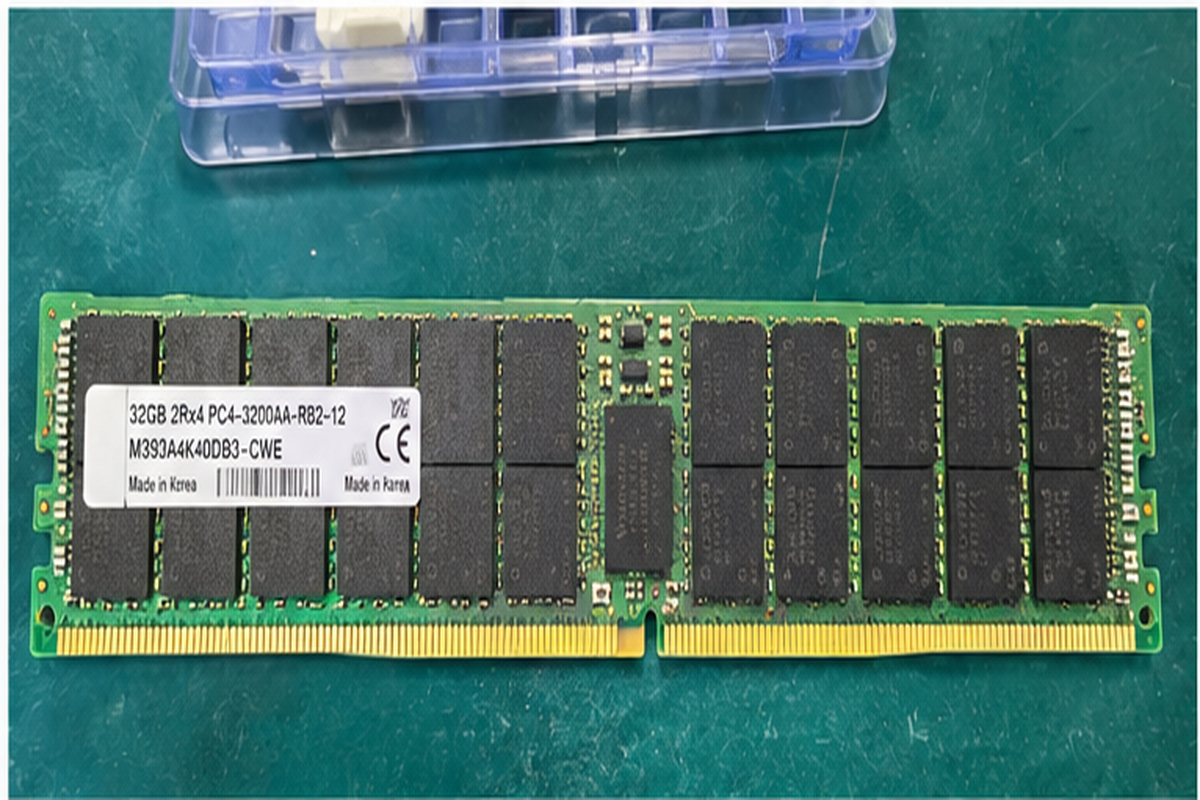
In our OEM integration reviews, procurement teams often make the mistake of treating memory modules as interchangeable commodity parts. Hardware platforms enforce strict electrical constraints at the silicon level. Understanding these constraints will help you select the exact memory profile your infrastructure actually requires.
How does electrical load define buffered or unbuffered RAM limits?
High-density server platforms generate immense electrical capacitance across the memory channels. If your memory controller cannot drive this electrical load cleanly, your operating system will suffer random kernel panics and bus errors. Selecting the correct topology solves this electrical bottleneck before assembly.
Electrical load determines module limits because unbuffered memory places every DRAM chip directly onto the memory controller bus. As you populate more ranks, signal integrity degrades rapidly.[^1] Buffered memory solves this by placing a register chip between the controller and the DRAM chips, which isolates the electrical load and preserves signal clarity.
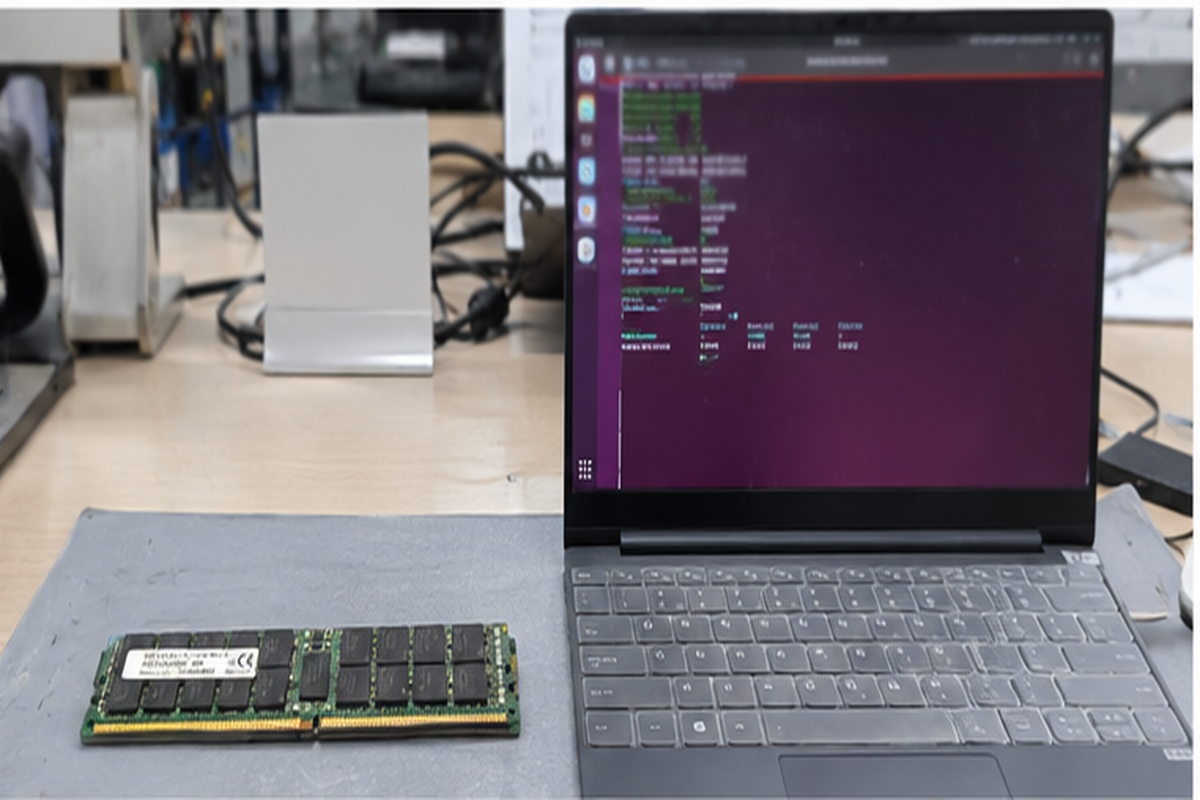
The Mechanics of the Register Buffer
When an integrated memory controller (IMC) inside a CPU communicates with dynamic random-access memory (DRAM), it sends command, address, and clock signals across parallel copper traces on the printed circuit board. In an unbuffered DIMM (UDIMM), each chip on the memory module connects directly to these traces.
As you add more memory modules and more ranks per channel, the cumulative capacitance and electrical loading multiply. The physical transceiver inside the CPU can only supply a finite amount of drive strength. Exceeding this drive strength leads to signal reflections, timing jitter, and data corruption.
Registered DIMMs (RDIMMs)—commonly known as buffered memory—introduce a dedicated hardware register directly on the memory module. The register acts as a digital repeater:
- The CPU memory controller addresses the register chip instead of addressing every individual DRAM chip directly.
- The register re-drives the command and address signals cleanly to the local DRAM components on that stick.[^2]
- The memory controller sees only a single electrical load per module on the command and address bus, regardless of how many individual memory chips are mounted on the printed circuit board.
UDIMM Topology:
[CPU Memory Controller] ───► Direct Bus Load ───► [DRAM Chip 1] + [DRAM Chip 2] + [DRAM Chip N]

RDIMM Topology:
[CPU Memory Controller] ───► Single Load ───► [Register Buffer] ───► Internal Trace ───► [DRAM Chips]
The Latency vs. Capacity Trade-Off
The primary trade-off of introducing a register buffer is a one-clock-cycle delay. When the memory controller issues a command to an RDIMM, the register requires exactly one clock cycle ($t_{CK}$) to latch, recondition, and output that signal to the memory array.[^3]
In synthetic memory benchmarking software, this extra cycle appears as a minor latency penalty. Desktop gamers and high-frequency trading platforms obsess over single-nanosecond differences, which makes low-latency UDIMMs attractive in barebones single-socket systems.
In enterprise compute platforms, however, this micro-latency penalty is virtually invisible to real-world workloads. Virtualization hypervisors, distributed databases, and high-performance computing clusters depend far more on sustained memory bandwidth, channel parallelism, and total working set capacity than on an isolated single-cycle command penalty.
| Memory Metric | Unbuffered DIMM (UDIMM) | Buffered DIMM (RDIMM) | Load-Reduced DIMM (LRDIMM) |
|---|---|---|---|
| Primary Buffer Hardware | None (Direct trace) | Register for Command/Address | Register + Data Buffers (DB) |
| Electrical Load on IMC | Heavy (Multiplies with ranks) | Low (Single load per DIMM) | Very Low (Fully isolated bus) |
| Typical Max Slots/Channel | 1 to 2 DIMMs per channel | Up to 2 to 3 DIMMs per channel | Up to 3 DIMMs per channel |
| Max Practical Channel Speed | Throttles as slots fill up | Maintains rated clock speed | Maintains high clocks at peak density |
| Command Latency | Baseline (Lowest) | +1 Clock Cycle Delay | +1 Clock Cycle + Buffer Traversal |
| System Cost per Gigabyte | Low at low capacities | Moderate to High | Highest |
When system integrators attempt to populate every channel slot using unbuffered modules, server platforms often force the memory clock down to maintain electrical stability[^4]. A server running four UDIMMs at a forced downclocked speed of 2133 MT/s delivers substantially worse throughput than an RDIMM array running stably at full rated speed.
Why does the ECC confusion complicate buffered or unbuffered RAM procurement?
Procurement teams often misinterpret technical specifications and order mismatched parts under tight deadlines. When buyers treat error-correcting code and memory buffering as the same feature, procurement cycles grind to an expensive halt. Disentangling these two architectural attributes ensures clean bill-of-materials validation on the first pass.
The confusion stems from assuming all ECC memory is buffered, which is incorrect. ECC is an algorithmic error-detection mechanism that requires extra data bits, while buffering is an electrical interface technology. Unbuffered ECC memory (ECC UDIMM) exists specifically for entry-level workstations, whereas registered memory (RDIMM) almost always includes ECC capabilities.
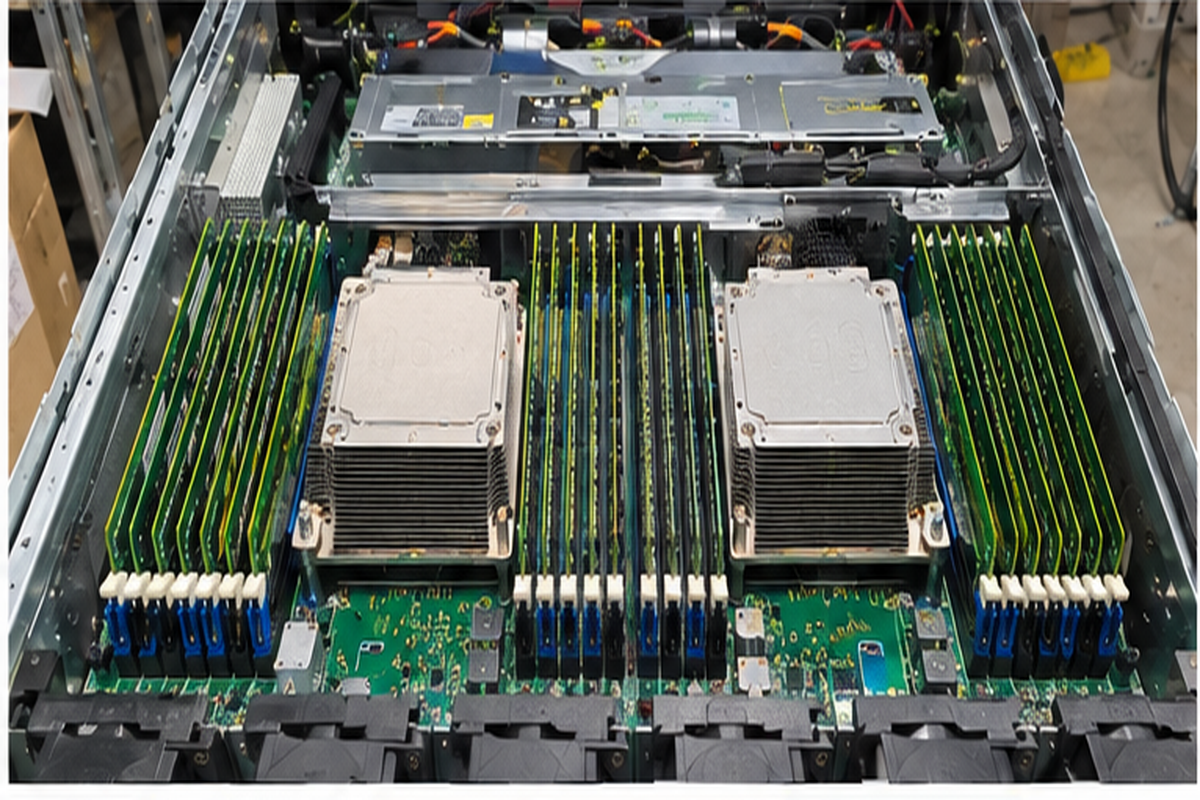
Separating Error Correction from Signal Buffering
In our technical sizing discussions with system integrators, the single most common specification error we see in incoming requests for quotation (RFQs) is the generic line item: "32GB DDR4 ECC RAM."
This request lacks precision because memory architecture operates on two completely independent functional axes:
- Logical Integrity (ECC vs. Non-ECC): Standard memory uses a 64-bit wide data bus. Error-Correcting Code (ECC) modules add an extra 8 bits of parity bus width, bringing the bus to 72 bits.[^5] The CPU memory controller uses these parity bits to execute Hamming codes, detecting and correcting single-bit soft errors caused by cosmic rays or thermal drift, while detecting double-bit errors to prevent silent data corruption.[^6]
- Electrical Topography (Buffered vs. Unbuffered): This axis describes whether the module contains a physical register chip to isolate electrical bus loads.
Because enterprise servers demand both high capacity (which requires registered buffers) and zero silent data corruption (which requires ECC), virtually all RDIMMs and LRDIMMs are manufactured with ECC circuitry as standard practice.
However, the reverse is not true. Unbuffered memory exists in two distinct flavors:
- Non-ECC UDIMM: Standard consumer desktop RAM. It features no register and no parity bits (64-bit bus).
- ECC UDIMM: Specialized workstation memory. It features no register, but it does incorporate an extra physical DRAM package to support the 72-bit parity bus.
                     ┌───────────────────────┐
                     │   Memory Topologies   │
                     └──────────┬────────────┘
                                │
        ┌───────────────────────┴───────────────────────┐
        ▼                                               ▼
┌───────────────┐                               ┌───────────────┐
│  Unbuffered   │                               │   Buffered    │
│    (UDIMM)    │                               │ (RDIMM/LRDIMM)│
└───┬───────┬───┘                               └───────┬───────┘
    │       │                                           │
    ▼       ▼                                           ▼
Non-ECC    ECC                                       Purely ECC
(Consumer) (Entry Workstation)                       (Enterprise Server)
The Cost of Procurement Misalignment
I once worked with an appliance vendor building a network monitoring appliance. Their sourcing team procured standard registered RDIMMs to hit an attractive bulk price. However, their industrial motherboard utilized an entry-level processor family that only supported unbuffered memory interfaces.
When the assembly floor populated the motherboards, the units failed to complete Power-On Self-Test (POST). The systems remained completely inert because consumer-grade and entry-tier workstation CPUs physically lack the firmware microcode and register timing support needed to initialize an RDIMM.
The vendor faced two unpalatable choices:
- Scrap the chassis motherboards and redesign the platform around scalable enterprise silicon.
- Absorb the restocking fees, return the RDIMMs, and locate scarce ECC UDIMM allocations on the spot market.
To protect your procurement timeline, your engineering and purchasing departments must treat buffering and error correction as separate parameters on every bill of materials.
Which deployment environments demand buffered or unbuffered RAM solutions?
Hardware budgets suffer when engineering teams over-specify components for lightweight nodes or under-specify memory for heavy compute workloads. Allocating platform resources blindly leads to premature thermal throttling or system instability under heavy load. Mapping your memory architecture to specific compute roles guarantees long-term operational reliability.
Deployment environments demand specific memory types based on socket count and capacity requirements. Unbuffered RAM fits single-socket industrial PCs, basic network firewalls, and light edge appliances where density stays below 128 gigabytes. Buffered RAM is mandatory for multi-socket enterprise servers, virtualization nodes, database clusters, and dense storage platforms requiring maximum capacity.
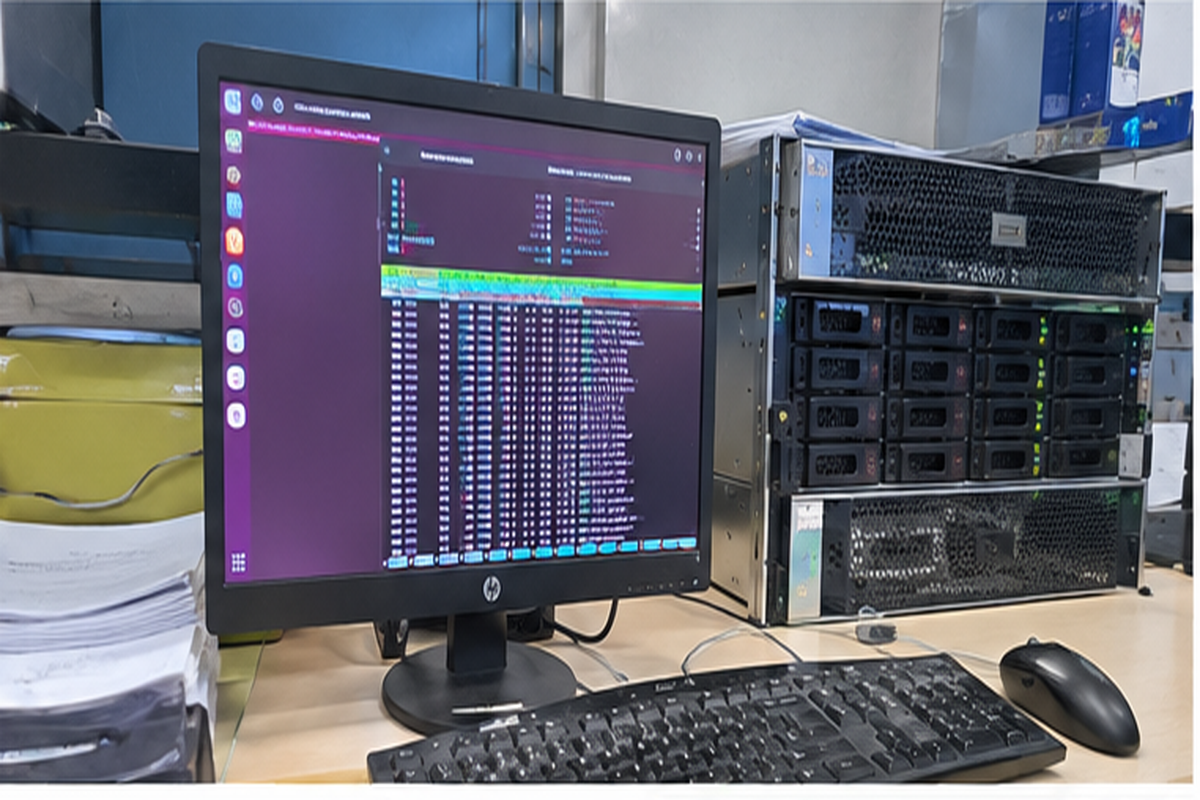
Application Mapping and Platform Architecture
Memory selection directly drives your server chassis layout, power distribution, and platform thermals. The operational environment dictates where buffered or unbuffered RAM delivers the most cost-effective stability.
1. Edge Appliances and Industrial Control Units
In compact edge installations, equipment operates inside harsh environments with limited thermal dissipation budgets. These platforms typically use single-socket embedded processors (such as low-power system-on-chip architectures) and rarely require more than 32GB to 64GB of total RAM.
Here, unbuffered memory (specifically ECC UDIMM) is the standard choice:
- Power draw per module remains minimal because there is no register consuming auxiliary power.
- The memory controller routes to only one or two physical slots, eliminating the electrical load penalty.
- Module costs remain lower at lower gigabyte tiers.
2. Virtualization Hosts and Hyperconverged Infrastructure
Data center virtualization nodes hosting hundreds of virtual machines (VMs) prioritize density above all else. In a hypervisor cluster running platforms like VMware ESXi or Proxmox, host servers run out of physical memory long before they exhaust CPU core execution pipelines.
In this environment, buffered memory (RDIMM or LRDIMM) is non-negotiable:
- Multi-socket server motherboards require 8 to 16 DIMM slots per CPU socket. Unbuffered RAM cannot physically function across this number of memory channels without crashing the bus.[^7]
- RDIMMs support multi-rank designs (dual-rank and quad-rank modules) yielding capacities of 64GB, 128GB, and 256GB per stick.[^8]
- Platform management controllers (IPMI/BMC) depend on robust telemetry provided by enterprise registered modules to predict hardware failures before downtime occurs.[^9]
3. High-Density Storage Servers and Scale-Out NAS
Storage controllers handling large ZFS storage pools or object storage tiers rely on expansive memory arrays for read-caching (such as the ZFS Adaptive Replacement Cache).[^10] A storage server housing 24 to 36 drive bays must sustain high-bandwidth data transfers without bit-rot or interface stalls.
Using buffered RAM ensures that these storage nodes can house hundreds of gigabytes of registered memory, maintaining data pipeline stability during aggressive parity recalculations.
| Workload Category | Recommended Memory Type | Target Capacity Range | Primary Driver |
|---|---|---|---|
| Light Network Appliance | Non-ECC / ECC UDIMM | 8GB – 32GB | Low power, low cost, minimal capacity need |
| Embedded Industrial PC | ECC UDIMM | 16GB – 64GB | Physical footprint, thermal limits, silent error protection |
| Entry Workstation / CAD | ECC UDIMM | 32GB – 128GB | Clock latency, single-threaded speed, ECC safety |
| Virtualization Node | RDIMM / LRDIMM | 256GB – 2TB+ | High slot density, rank multiplication, uptime |
| Tier-1 Enterprise Database | RDIMM / LRDIMM | 512GB – 4TB+ | High working set in RAM, complete bus stability |
Before approving any hardware build, review your motherboard vendor's Qualified Vendor List (QVL) and processor documentation. Server motherboards clearly state whether they mandate RDIMMs or UDIMMs. Never attempt to configure hardware outside those platform guidelines.
Frequently Asked Questions
Can I mix buffered and unbuffered RAM on the same motherboard?
No, you cannot mix buffered and unbuffered RAM on the same motherboard. The CPU memory controller cannot operate in registered and direct-bus modes simultaneously.[^11] If you install both types together, the system will fail to initialize the memory bus and will refuse to complete the boot sequence.
Does unbuffered RAM run faster than buffered RAM?
Unbuffered RAM provides slightly lower command latency because signals bypass the register buffer. However, in enterprise systems with multiple memory channels populated, buffered RAM actually delivers superior effective performance because it prevents the memory controller from downclocking the channel frequency to compensate for electrical signal degradation.
Why does my server fail to boot with unbuffered RAM installed?
Your server likely fails to boot because your multi-socket server CPU and motherboard chipset require registered memory by design. Enterprise platform firmware explicitly checks for the register component during POST. If the register is absent, the system throws a memory initialization error and halts system startup.
What is the difference between RDIMM and LRDIMM?
RDIMMs place a register only on the command and address lines, leaving data lines directly connected to the memory controller. Load-Reduced DIMMs (LRDIMMs) place memory buffers on both the command/address lines and the data lines.[^12] This design reduces electrical loading even further, unlocking the highest possible server memory capacities.
Conclusion
Choosing between buffered or unbuffered RAM is not a debate over raw speed, but a structural decision governed by platform architecture, electrical load constraints, and capacity targets. Unbuffered memory provides responsive, low-latency performance for entry-level endpoints and light edge hardware. Buffered memory supplies the vital electrical stability and signal isolation required to run mission-critical enterprise workloads at scale without risk of downtime.
At our OEM/ODM manufacturing facilities, we design and produce custom enterprise servers, compute modules, and specialized data center power systems built to exact operational standards. If you are developing a custom compute platform or need dependable hardware sizing support, contact our engineering team to review your memory architecture and bill of materials.
[^1]: "Registered memory", https://en.wikipedia.org/wiki/Registered_memory. Demonstrates that unbuffered multidrop memory topologies experience severe capacitive loading and signal reflection as the number of attached DRAM loads increases. Evidence role: mechanism; source type: research. Supports: Direct connection of DRAM ranks to the memory bus increases capacitive loading and causes signal integrity degradation.. Scope note: Analysis evaluates simulated bus traces and standard DDR interface routing rather than modern proprietary motherboard optimizations. [^2]: "JEDEC memory standards", https://en.wikipedia.org/wiki/JEDEC_memory_standards. JEDEC specifications define the operational role of the registering clock driver in buffering incoming command/address signals and isolating the host controller from DRAM device loading. Evidence role: mechanism; source type: institution. Supports: RDIMM architecture incorporates a registering clock driver that buffers and re-drives command and address lines.. [^3]: "Registered memory", https://en.wikipedia.org/wiki/Registered_memory. Confirms that registered memory buffers add an intentional one-clock-cycle pipeline latency compared to unbuffered memory when latching address and control signals. Evidence role: mechanism; source type: education. Supports: RDIMMs impose an additional one-clock-cycle command delay during signal re-buffering.. Scope note: Latency measurements reflect raw hardware cycle timing and exclude operating-system-level caching mitigations. [^4]: "Multi-channel memory architecture", https://en.wikipedia.org/wiki/Multi-channel_memory_architecture. Platform design guides verify that populating multiple DIMMs or ranks per channel reduces maximum supported bus transfer speeds to preserve timing margins. Evidence role: mechanism; source type: institution. Supports: Memory controllers downclock bus frequency when channel loading exceeds signal margin thresholds.. [^5]: "DDR SDRAM", https://en.wikipedia.org/wiki/DDR_SDRAM. Details the conventional memory architecture wherein eight extra check bits augment the 64-bit data bus to enable error-correcting codes. Evidence role: definition; source type: encyclopedia. Supports: Standard ECC memory designs expand the 64-bit data bus to 72 bits to provide error check and parity bits.. Scope note: Does not account for DDR5 sub-channel architectures which divide the channel into dual 32-bit plus check-bit channels. [^6]: "Soft error", https://en.wikipedia.org/wiki/Soft_error. Extensive field studies confirm that atmospheric neutrons cause transient DRAM bit flips, which standard Hamming-based SECDED schemes successfully detect and mitigate. Evidence role: mechanism; source type: paper. Supports: Atmospheric radiation induces DRAM soft errors that single-error-correcting double-error-detecting (SECDED) codes mitigate.. Scope note: Field study error rates depend strongly on elevation, geomagnetic latitude, and silicon fabrication process nodes. [^7]: "Multi-channel memory architecture", https://en.wikipedia.org/wiki/Multi-channel_memory_architecture. Computer systems architecture textbooks explain that high slot-count, multi-channel enterprise systems generate signal loading that exceeds the drive constraints of unbuffered memory interfaces. Evidence role: general_support; source type: education. Supports: High-density multi-channel server platforms exceed the electrical load margins permissible for unbuffered DIMMs.. Scope note: Theoretical slot limits are contingent upon bus trace length and memory controller generation. [^8]: "DIMMs", https://en.wikipedia.org/wiki/DIMM. Reports on high-density DRAM packaging demonstrate that registered architectures combined with 3D stacked dies enable DIMM densities of 128GB to 256GB while maintaining manageable bus loads. Evidence role: statistic; source type: research. Supports: Registered memory architectures enable dense multi-rank and 3DS configurations reaching 128GB to 256GB per module.. Scope note: Capacities above 128GB frequently require specialized 3DS die-stacking rather than purely planar multi-rank layouts. [^9]: "Exploring Error Bits for Memory Failure Prediction: An In-Depth Correlative ...", https://arxiv.org/html/2312.02855v2. Large-scale data center studies show that baseboard management controllers analyze correctable memory error logs and sensor telemetry to preemptively identify failing DIMMs before uncorrectable errors induce downtime. Evidence role: case_reference; source type: paper. Supports: Server management controllers capture memory telemetry and correctable error thresholds to forecast module failures.. Scope note: Predictive accuracy varies based on the specific predictive failure analysis algorithms and threshold policies implemented by platform firmware. [^10]: "Adaptive replacement cache", https://en.wikipedia.org/wiki/Adaptive_replacement_cache. Establishes that the ZFS storage architecture utilizes an Adaptive Replacement Cache algorithm in primary memory to optimize read hits over traditional LRU caching schemes. Evidence role: mechanism; source type: paper. Supports: ZFS dynamically allocates system RAM to maintain an Adaptive Replacement Cache (ARC) for high-performance read caching.. [^11]: "Registered memory", https://en.wikipedia.org/wiki/Registered_memory. Platform controller documentation notes that the memory physical interface must configure unified command timings, making simultaneous registered and direct unbuffered bus operation impossible. Evidence role: mechanism; source type: research. Supports: Memory controllers are architecturally incapable of intermixing registered and direct-bus timing protocols across active channels.. [^12]: "memory", https://www.jedec.org/taxonomy/term/2779. JEDEC architectural standards specify that LRDIMMs replace direct DRAM data bus connections with distributed data buffers, isolating both control and data lines from the host controller. Evidence role: definition; source type: institution. Supports: LRDIMMs incorporate memory buffers on both address/command lines and data paths..
发表回复