

Finding accurate pricing for 32GB RAM for a server can […]
Finding accurate pricing for 32GB RAM for a server can frustrate even experienced procurement managers because open-market figures change constantly. Volatile chip supplies, shifting generation standards, and vague technical specifications often lead teams to overpay or purchase completely unusable parts. You can control these hardware expenses once you understand how silicon generations, architecture tiers, and vendor markups dictate the real bill of materials.
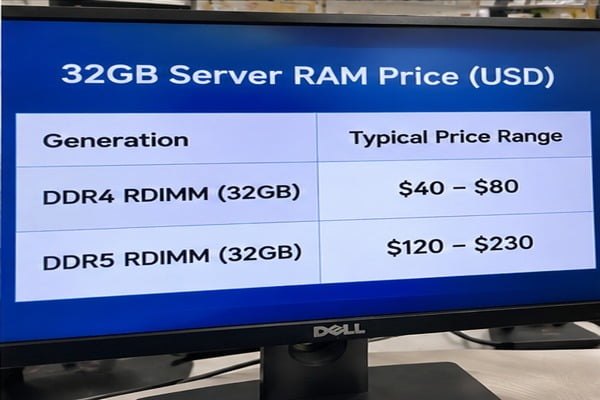
A single module of 32GB RAM for a server generally costs between $40 and $80 for legacy DDR4 ECC Registered memory, while modern enterprise DDR5 ECC Registered modules typically range from $120 to $230 or more. Actual procurement pricing fluctuates based on generation, memory buffering architecture, spot market commodity conditions, and OEM branding markups.

These baseline numbers only scratch the surface of enterprise hardware procurement. Deploying memory in production requires looking beyond initial unit prices to balance platform compatibility, vendor contracts, and CPU architectures. Let us break down the exact technical variables that shape your total invoice.
Why does generation drive the cost of 32GB RAM for a server?
Procurement teams often see wide price gaps between identical-looking modules and risk buying obsolete hardware to save money. Outdated memory creates performance bottlenecks, while brand-new standards stretch project budgets past their limits. Evaluating memory by platform generation aligns your hardware budget directly with your actual compute requirements.
Generation dictates the price of 32GB RAM for a server because newer silicon standards feature higher density, faster transfer rates, and integrated power management. Mature DDR4 RDIMMs trade at commodity floor rates, while cutting-edge DDR5 RDIMMs command premium prices due to active fab allocation and tighter enterprise platform qualification demands.
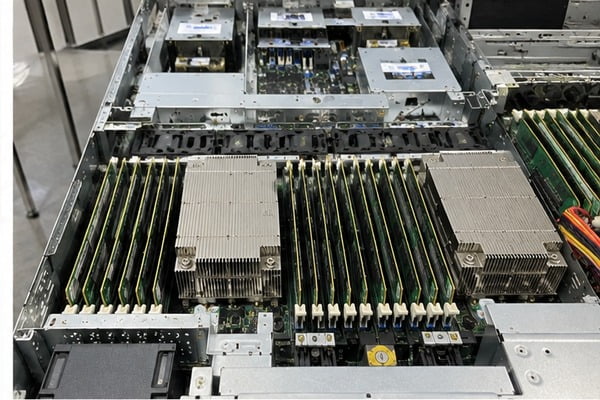
The Silicon Generation Price Split
When clients ask me for a ballpark quote on memory upgrades, my first question is always about the processor generation running in their racks. The platform dictates the memory standard, and the memory standard dictates the cost curve.
Enterprise server memory does not follow consumer pricing cycles. Instead, it follows enterprise server refresh schedules and fabrication node transitions.
DDR3 (Legacy Platforms)  -->  High scarcity premiums on specialized parts
DDR4 (Mainstream Volume) -->  Lowest cost per gigabyte ($1.25 – $2.50 / GB)
DDR5 (Current Enterprise)-->  Premium pricing for speed and PMIC ($3.75 – $7.00+ / GB)
DDR4: The Current Value Baseline
DDR4 ECC Registered DIMMs (RDIMMs) represent the lowest cost per gigabyte in the enterprise market today. Because global semiconductor fabs ran DDR4 lines at peak capacity for years, standard 32GB DDR4-3200 MT/s modules sit at accessible commodity price points.
- Platform Compatibility: Dual-socket platforms running 2nd and 3rd Generation Intel Xeon Scalable processors (Cascade Lake, Ice Lake) or AMD EPYC 7002/7003 series (Rome, Milan).
- Average Procurement Cost: Roughly $40 to $80 per 32GB module on the commercial market.
- Procurement Reality: Supply remains widespread, though Tier-1 fabs are gradually shifting wafer capacity toward DDR5 and High Bandwidth Memory (HBM). As fab lines convert, DDR4 pricing will stabilize before experiencing long-tail legacy price hikes.
DDR5: The Performance Premium
If you are sourcing modules for 4th or 5th Generation Intel Xeon Scalable processors (Sapphire Rapids, Emerald Rapids) or AMD EPYC 9004 series (Genoa, Bergamo), DDR4 is not physically or electrically compatible. You must deploy DDR5.
DDR5 is not simply a faster DDR4; it incorporates major architectural redesigns that increase bill-of-materials (BOM) costs:
- On-DIMM Power Management IC (PMIC): Unlike DDR4, which relies on the motherboard to regulate voltage, DDR5 moves power management directly onto the module itself[^1]. This improves signal integrity but introduces additional active silicon components to the stick.
- Dual 32-bit Sub-channels: Each DDR5 module functions as two independent 32-bit communication channels[^2] (plus an extra 8 bits for ECC), doubling efficiency and complexity.
- On-die ECC combined with Sideband ECC: DDR5 features internal error checking inside the DRAM chip itself[^3], working in tandem with the module-level ECC register.
| Generation | Standard Speed Range | Typical 32GB Price Range (Unbranded/OEM-Equivalent) | Power Regulation | Typical Production Workloads |
|---|---|---|---|---|
| DDR4 RDIMM | 2666 – 3200 MT/s | $40 – $80 | Motherboard VRM | Web hosting, microservices, legacy databases |
| DDR5 RDIMM | 4800 – 5600 MT/s | $120 – $230 | On-DIMM PMIC | Virtualization clusters, AI inference, in-memory analytics |
DDR5 commands a noticeable price premium because DRAM manufacturers are still amortizing initial tooling, testing processes, and high-frequency validation equipment.
How does memory architecture impact the price of 32GB RAM for a server?
Purchasing the cheapest memory module found online often results in non-booting servers during physical staging. Many buyers mistake entry-level workstation RAM for true data center memory, wasting valuable engineering hours on emergency returns. Understanding buffering architecture eliminates costly compatibility mistakes before placing bulk purchase orders.
Memory architecture directly sets module cost because buffering technologies dictate how the server memory controller handles electrical loads. Standard unbuffered ECC (UDIMM) is cheaper but strictly limited to entry-level servers. Registered ECC (RDIMM) and Load-Reduced (LRDIMM) incorporate hardware registers and buffers, raising manufacturing costs while enabling multi-socket enterprise scaling.
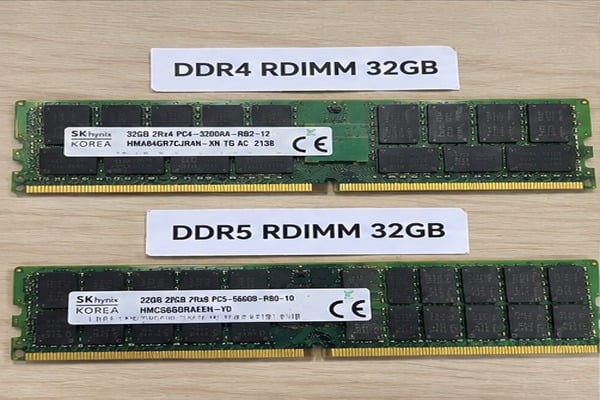
Decoding Memory Buffering: UDIMM vs. RDIMM vs. LRDIMM
One of the most frequent support tickets I review involves a buyer who found a "bargain" 32GB server module, only to discover their chassis refused to post. The buyer had purchased unbuffered ECC modules for an enterprise dual-socket motherboard that strictly requires registered memory.
Enterprise memory is categorized into three distinct architectural classes, and they cannot be mixed on the same motherboard:
UDIMM (Unbuffered) <-- DO NOT MIX --> RDIMM (Registered) <-- DO NOT MIX --> LRDIMM (Load-Reduced)1. Unbuffered ECC (UDIMM / ECC UDIMM)
- Design: Connects the memory chips directly to the CPU's integrated memory controller without intermediate registers.
- Target Platforms: Single-socket edge microservers, entry-level NAS appliances, and specialized industrial boards (e.g., platforms using Intel Xeon E-series or AMD Ryzen PRO).
- Cost Factor: While simpler to manufacture, 32GB ECC UDIMMs are relatively scarce. High-density unbuffered chips are difficult to manufacture reliably, sometimes making a 32GB ECC UDIMM more expensive than an equivalent enterprise RDIMM.
2. Registered ECC (RDIMM)
- Design: Includes a hardware register (the Registering Clock Driver, or RCD) between the CPU and the DRAM chips. The register buffers the command and address lines[^4].
- Target Platforms: Standard enterprise rackmount and tower servers (Intel Xeon Scalable, AMD EPYC).
- Cost Factor: The industry workhorse. Because it is manufactured in massive production runs for enterprise data centers, standard 32GB RDIMMs offer the sweet spot between stability, electrical scale, and unit pricing.
3. Load-Reduced ECC (LRDIMM)
- Design: Buffers both the command/address lines and the actual data lines using a distributed memory buffer (MB) chip architecture[^5].
- Target Platforms: Massive memory density servers needing high capacities across multiple DIMMs per channel without dropping operating frequencies.
- Cost Factor: LRDIMMs are common in 64GB, 128GB, and 256GB capacities. While 32GB LRDIMMs exist in DDR4, they carry higher historical component costs and rarely make financial sense today compared to standard RDIMMs.
Engineering Rule of Thumb: Never attempt to cut corners by mixing memory types. A motherboard slot physically accepts both UDIMM and RDIMM forms if the pin count matches, but the platform's memory controller will drop into an error state if mismatched types are installed.
Does OEM certification inflate the price of 32GB RAM for a server?
Enterprise budgets bleed unnecessary capital when buyers blindly check manufacturer branding boxes during procurement. Vendor brand premiums can double your component spend without offering a single additional megatransfer of performance. Distinguishing genuine technical requirements from vendor margin strategies protects both your bottom line and your production warranties.
Yes, OEM certification can inflate the price of 32GB RAM for a server by 100% to 300%. Server vendors such as Dell, HPE, and Lenovo repackage silicon from primary manufacturers like Samsung, SK Hynix, or Micron with proprietary firmware stickers to enforce service-level agreements and enterprise support contract compliance.
The Silicon Reality: The "Big Three"
There are only three major DRAM silicon manufacturers in the world[^6]:
- Samsung Electronics
- SK Hynix
- Micron Technology
Every branded module bearing a Dell, HPE, or Lenovo label contains silicon manufactured by one of these three fabricators. The major OEM vendors do not operate semiconductor wafer fabrication plants for memory.
When you order a 32GB module from a primary server vendor, the module leaves a Samsung, Micron, or SK Hynix packaging facility. The OEM applies an internal part number sticker, writes custom tracking information into the module's Serial Presence Detect (SPD) EEPROM chip[^7], and marks up the component.
Why Do Organizations Pay the OEM Premium?
If the silicon is identical, why do procurement teams pay $200 for a DDR4 module that trades on the open market for $60?
OEM Branded Memory ($$$$)  ---> Guaranteed SLA Support / Bundled Hardware Warranty
Tier-1 Equivalent Memory ($$) ---> Validated Compatibility / Direct Component Replacement- Support Contract Requirements: Many mission-critical mission profiles rely on 4-hour on-site enterprise service level agreements (SLAs). If an unbranded DIMM triggers an error, certain vendor technicians may insist on isolating or replacing the third-party module before servicing the mainboard.
- Pre-Flashing and Platform Diagnostics: OEM modules feature proprietary SPD profiles that integrate cleanly with remote server management engines (such as Dell iDRAC or HPE iLO). This ensures that health metrics, thermals, and memory errors log directly to the chassis console without generic warnings.
How to Safely Source Third-Party Server RAM
For white-box custom chassis, OEM/ODM bare-metal deployments, and post-warranty enterprise infrastructure, purchasing direct OEM-labeled memory wastes capital.
When sourcing third-party 32GB modules, always ensure your supplier follows these guidelines:
- True Tier-1 Provenance: Purchase modules directly built and branded by Micron, Samsung, or SK Hynix.
- SPD Validation: Verify that the timing configurations, CAS latencies, and voltage profiles exactly match the server motherboard's Qualified Vendor List (QVL).
- Verify SLA Terms: Review your platform warranty fine print. In many jurisdictions, system vendors cannot legally void a system warranty for using compatible third-party components[^8] unless the component itself causes direct hardware damage.
How do multi-channel architectures shift the actual deployment cost of 32GB RAM for a server?
Buying a single memory module to cut initial capital spend cripples your server's compute capacity from day one. System integrators frequently watch multi-thousand-dollar processors stall because memory bandwidth is choked by unbalanced configurations. Planning your memory budget around channel architecture delivers full computing value rather than false savings.
Multi-channel architectures shift overall costs because modern server CPUs require symmetrical module placement to reach full memory bandwidth. Rather than buying a single 32GB RAM for a server, deploying balanced memory across eight or twelve channels per CPU socket requires purchasing multiple modules simultaneously, which scales initial capital outlay.
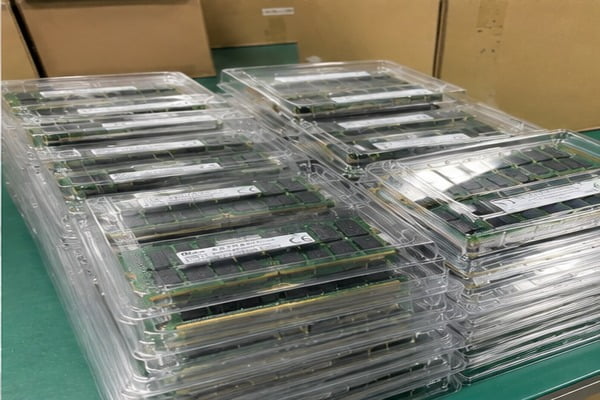
The Cost of Leaving Memory Channels Unpopulated
In modern enterprise server platforms, memory is not a single pipeline; it is a multi-lane highway. Modern server CPUs feature built-in memory controllers with dedicated channels to move data directly between cores and physical memory chips.
If you purchase only one 32GB module for a server running an AMD EPYC 9004 processor, you are populating one channel out of twelve. You will save money on the immediate bill of materials, but you will choke the processor's available memory throughput by over 90%.
Single 32GB DIMM Installed   ---> [1 Channel Active]  ---> Huge CPU Idle Time / Low Bandwidth
12x 32GB DIMMs Installed     ---> [12 Channels Active]---> 100% Interleaved Memory Bandwidth
Channel Population by Platform Generation
To achieve balanced performance, you must deploy identical memory modules across all primary channels:
- Intel Xeon Scalable (2nd Gen - Cascade Lake): 6 Channels per socket[^9] (Requires 6 or 12 modules).
- Intel Xeon Scalable (3rd Gen - Ice Lake): 8 Channels per socket (Requires 8 or 16 modules).
- Intel Xeon Scalable (4th/5th Gen - Sapphire Rapids/Emerald Rapids): 8 Channels per socket (Requires 8 or 16 modules).
- AMD EPYC (7002/7003 Series - Rome/Milan): 8 Channels per socket (Requires 8 or 16 modules).
- AMD EPYC (9004 Series - Genoa/Bergamo): 12 Channels per socket[^10] (Requires 12 or 24 modules).
Budget Scaling: From Unit Cost to Platform Deployment
When budgeting for a dual-socket AMD EPYC 9004 server, you cannot think in terms of a $150 module. You must budget for 24 channels to ensure balanced performance across both sockets.
| Target Platform Architecture | Channels per CPU | Minimum Balanced DIMM Count (Dual Socket) | Unit Cost (Est. 32GB DDR5 RDIMM) | Total Memory Deployment Cost |
|---|---|---|---|---|
| Intel 3rd Gen / AMD Milan | 8 Channels | 16 Modules | ~$60 (DDR4) | ~$960 |
| Intel 4th/5th Gen Xeon | 8 Channels | 16 Modules | ~$150 (DDR5) | ~$2,400 |
| AMD EPYC 9004 Series | 12 Channels | 24 Modules | ~$150 (DDR5) | ~$3,600 |
If your workload requires only 256GB of total RAM, buying eight 32GB DDR4 modules ($480) will run significantly faster than buying two 128GB modules ($700+), because all eight channels interleave data concurrently. Calculating procurement costs strictly per-module blinds teams to the performance penalties of unbalanced memory configurations.
Frequently Asked Questions
Can I use consumer non-ECC RAM in an enterprise server chassis?
No. Enterprise server processors and motherboards require Error-Correcting Code (ECC) to detect and correct single-bit memory flips[^11]. Standard consumer desktop DDR4 or DDR5 lacks both the electrical registers and the sideband parity silicon required by enterprise BIOS firmware. The server will fail the Power-On Self-Test (POST).
Can I mix 32GB DDR4 RDIMMs and LRDIMMs in the same server?
No. You cannot mix Registered (RDIMM) and Load-Reduced (LRDIMM) modules within the same chassis or memory channel. While both use similar physical slots, their electrical signaling and buffering architectures work differently. Mixing them prevents the memory controller from stabilizing the electrical bus, resulting in boot failures.
Will third-party 32GB server RAM void my hardware warranty?
Generally, no. Major server manufacturers cannot legally void your overall system chassis warranty simply because you installed Tier-1 equivalent third-party memory. However, the vendor's technical support may decline to troubleshoot memory-specific errors unless you reproduce the fault using their own certified modules. Always verify your current SLA terms.
How does memory speed affect the price of 32GB server RAM?
Higher operational speeds (such as DDR5-5600 versus DDR5-4800) typically carry a 10% to 25% price premium. Modules rated for higher frequencies require tighter silicon binning[^12] and more robust power management circuitry. Verify your processor's maximum native memory clock speed before purchasing, as faster modules automatically downclock to match CPU limitations.
Conclusion
Understanding the actual cost of 32GB RAM for a server requires evaluating more than just retail price tags. Real procurement costs range from $40 for mature DDR4 RDIMMs to over $200 for current DDR5 enterprise modules. The final total depends on your generation requirements, buffering architecture, OEM certification needs, and the number of channels required to balance your server's processors. Prioritizing validated Tier-1 silicon over arbitrary vendor brand markups allows procurement teams to optimize capital spending without compromising production stability.
If you are designing custom compute racks, high-density storage platforms, or enterprise edge appliances, sourcing validated hardware shouldn't stall your rollout. As a specialized OEM/ODM hardware manufacturer, our team delivers custom server platforms, certified power systems, and fully tested enterprise memory configurations scaled to your exact operational requirements. Contact our pre-sales engineering team today to review your bill of materials and streamline your deployment schedule.
[^1]: "PMIC5000/PMIC5010 Power Management IC Standard", https://www.jedec.org/standards-documents/docs/jesd301-1a03. Corroborates the JEDEC DDR5 specification shifting primary voltage regulation circuitry from system mainboards onto the DIMM assembly via dedicated PMICs. Evidence role: mechanism; source type: institution. Supports: Architectural standard defining on-module power management integrated circuits (PMICs) for DDR5 memory.. Scope note: Covers electrical and structural standards without analyzing downstream component manufacturing costs. [^2]: "Single 32-bit Sub-Channel DDR5 DIMMs:Architecture ...", https://arxiv.org/html/2605.08725. Details the DDR5 memory interface standard established by JEDEC, which replaces the legacy 64-bit bus with two independent 32-bit subchannels plus parity bits. Evidence role: mechanism; source type: institution. Supports: The internal channel partitioning of DDR5 DIMMs into dual 32-bit subchannels.. Scope note: Addresses base bus topology rather than empirical bandwidth gains across diverse enterprise server workloads. [^3]: "XED: Exposing On-Die Error Detection Information for ...", https://fast.cc.gatech.edu/papers/ISCA_2016_1.pdf. Documents the integration of on-die single-bit error correction within DDR5 memory chips designed to mitigate scaling-induced raw fault rates at advanced lithography nodes. Evidence role: mechanism; source type: paper. Supports: Implementation of on-die error correction within individual DDR5 DRAM silicon dies.. Scope note: Focuses on internal chip-level reliability mechanisms rather than system-level multi-bit error detection handled by enterprise memory controllers. [^4]: "Performance and Energy Benefits of MRDIMMs", https://arxiv.org/html/2605.02371v1. Explains how RDIMM hardware registers isolate command and address buses from the host CPU memory controller to reduce electrical capacitance on multi-DIMM channels. Evidence role: mechanism; source type: encyclopedia. Supports: The functional mechanism of the Registering Clock Driver (RCD) on RDIMMs.. Scope note: Describes hardware signaling fundamentals without reviewing current commercial availability or pricing. [^5]: "DIMMs", https://en.wikipedia.org/wiki/DIMM. Analyzes the electrical design of LRDIMMs, which utilize dedicated buffer chips to isolate both control lines and data lines (DQ) from the memory controller to enable higher DIMM channel capacities. Evidence role: mechanism; source type: paper. Supports: Design principles of Load-Reduced DIMMs employing memory buffers across data and control lines.. Scope note: Focuses on memory bus signal integrity rather than lifecycle cost differences between RDIMMs and LRDIMMs. [^6]: "Global DRAM and HBM Market Share: Quarterly", https://counterpointresearch.com/en/insights/global-dram-and-hbm-market-share. Verifies that Samsung Electronics, SK Hynix, and Micron Technology collectively produce more than 90% of global DRAM supply. Evidence role: statistic; source type: research. Supports: Market concentration of DRAM silicon wafer manufacturing among the top three suppliers.. Scope note: Reflects broad market share data across all silicon segments and may vary slightly between consumer mobile and enterprise server DRAM. [^7]: "Serial presence detect", https://en.wikipedia.org/wiki/Serial_presence_detect. Outlines JEDEC standards for Serial Presence Detect EEPROMs, which store timing parameters, operational limits, and serial metadata transmitted to the system firmware during POST. Evidence role: mechanism; source type: institution. Supports: The role and standardization of Serial Presence Detect (SPD) EEPROM on memory modules.. Scope note: Discusses standardized SPD data structures rather than vendor-specific proprietary telemetry or lock-in extensions. [^8]: "Comments of the CERTIFIED AUTOMOTIVE PARTS ...", https://www.ftc.gov/sites/default/files/documents/public_comments/16-cfr-parts-239-700-701-702-and-703-request-comments-concerning-interpretations-magnuson-moss/00018-80827.pdf. Details Federal Trade Commission interpretations of the Magnuson-Moss Warranty Act, which bar tying warranty coverage to the exclusive purchase of OEM-branded parts unless provided free of charge. Evidence role: general_support; source type: government. Supports: Regulatory rules limiting manufacturers from invalidating warranties when consumers or businesses use compatible third-party replacement parts.. Scope note: Applies directly under United States federal commercial law and may not apply uniformly in international enterprise environments. [^9]: "Cascade Lake", https://en.wikipedia.org/wiki/Cascade_Lake. Confirms that Intel 2nd Generation Xeon Scalable processors feature two integrated memory controllers addressing up to six DDR4 channels per processor socket. Evidence role: mechanism; source type: research. Supports: Memory channel count and organization in 2nd Generation Intel Xeon Scalable microarchitecture.. Scope note: Addresses maximum theoretical channel support of the CPU silicon, which relies on vendor-specific motherboard trace routing. [^10]: "Epyc", https://en.wikipedia.org/wiki/Epyc. Documents the design of AMD EPYC 9004 series processors, which incorporate twelve memory channels per socket to scale memory bandwidth alongside core density. Evidence role: mechanism; source type: research. Supports: Twelve-channel DDR5 memory controller implementation on AMD EPYC 9004 series processors.. Scope note: Characterizes hardware channel capabilities rather than comparative benchmark degradation under unbalanced population models. [^11]: "Soft error", https://en.wikipedia.org/wiki/Soft_error. Explains how Single Error Correction and Double Error Detection (SECDED) Hamming codes embedded in enterprise memory systems correct transient single-bit soft errors. Evidence role: definition; source type: paper. Supports: The functional mechanism of ECC memory identifying and rectifying single-bit DRAM state errors.. Scope note: Focuses on theoretical error correction mechanisms rather than measuring field error rates across varied data center thermal envelopes. [^12]: "Product binning", https://en.wikipedia.org/wiki/Product_binning. Describes post-fabrication automated test routines that sort DRAM dies into discrete speed grades based on operating frequency tolerances and voltage margins. Evidence role: mechanism; source type: paper. Supports: The semiconductor speed binning methodology used to grade DRAM chips for higher frequency operation.. Scope note: Examines electrical yield classification methods rather than direct retail pricing premiums between memory speed tiers.
发表回复