

Procurement managers often ask our engineering team for […]
Procurement managers often ask our engineering team for the highest server ram grades to prevent unexpected server downtime. You face tight deadlines, shrinking infrastructure budgets, and confusing vendor quotes that promise enterprise-grade memory without technical specifics. Buying memory based on vague quality labels leads to costly over-provisioning or severe system crashes in your production clusters.
The concept of universal server ram grades does not exist as an official JEDEC industry tier; rather, enterprise memory quality is defined by structural bus architecture—such as ECC UDIMM, RDIMM, and LRDIMM—combined with tier-1 original manufacturer silicon binning and platform validation that match specific workload uptime requirements.

When evaluating memory for your custom server deployments, looking for generic tier labels will not protect your uptime. We must evaluate memory architecture, silicon traceability, and chassis-level thermal constraints to balance stability with your total acquisition budget.
Do universal server ram grades actually exist?
Procurement teams often waste thousands of dollars attempting to source consumer-style gold or bronze server ram grades. You balance strict uptime SLAs against tightening budgets, yet suppliers hand you ambiguous grade tiers that lack official documentation. Relying on arbitrary supplier grades risks purchasing mismatched modules that cause persistent memory bus parity errors.
Universal server ram grades do not exist in official JEDEC standards, as enterprise memory is categorized by buffering architecture, electrical load topologies, and original manufacturer binning rather than flat quality labels. Real reliability depends on selecting the proper module architecture and certified silicon matching the target memory controller.

Deconstructing the "Grade A" Procurement Myth
In consumer electronics, buyers look for speed tiers or marketing labels. In my pre-sales technical reviews with server integrators, I regularly encounter spec sheets requesting "Grade A server memory." When buyers ask us for this, the first counter-question we ask is what workload, socket architecture, and chassis density they are deploying.
JEDEC establishes strict electrical and physical specifications for solid-state memory modules. It does not certify arbitrary quality tiers like "Grade A" or "Tier 1." When gray-market distributors use these terms, they often refer to visual appearance or third-party cosmetic inspection, not true silicon stability.
JEDEC Architecture Types:
├── ECC UDIMM (Unbuffered, basic parity handling)
├── RDIMM (Registered clock/address lines)
└── LRDIMM (Load-Reduced, buffered data and control lines)
True enterprise qualification depends on structural memory topologies:
- Unbuffered ECC (ECC UDIMM): Basic error checking, limited electrical capacity, suitable for entry-level edge microservers.
- Registered Memory (RDIMM): Hardware register isolates command/address lines from the memory controller, stabilizing multi-DIMM channel configurations.
- Load-Reduced Memory (LRDIMM): Buffers both control lines and data lines, replacing ranks with physical memory buffers to maximize socket density.
Selecting among these architectures is an architectural necessity, not a quality upgrade. An RDIMM is not simply a "higher grade" than an ECC UDIMM; it is a fundamentally different electrical design designed for higher multi-channel bus loading.
How does silicon binning define server ram grades?
Component shortages often tempt buyers to purchase relabeled memory modules from third-party broker channels. You risk hardware parity faults and uncorrectable bit flips when these modules face 24/7 operating loads. Unverified memory modules directly compromise your enterprise platform reliability and damage your relationship with downstream data center clients.
Silicon binning establishes true functional server ram grades at the wafer level, where primary DRAM fabricators test individual dies for voltage leakage, thermal operating margins, and signal integrity under sustained enterprise operational stress before packaging and surface-mounting them onto certified printed circuit boards.
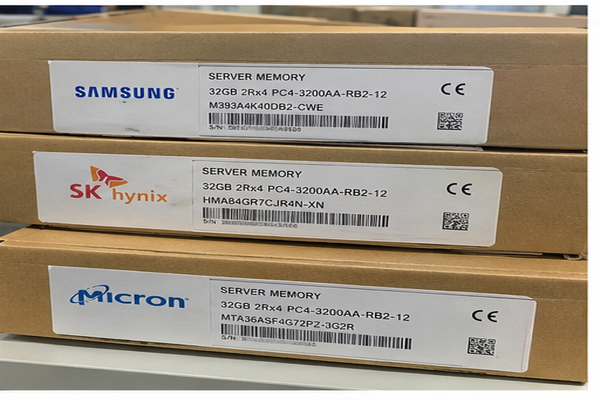
Original Die Manufacturers vs. Third-Party Assemblers
When evaluating hardware platforms, knowing who manufactured and screened the silicon is critical. The global DRAM market relies on three primary silicon fabricators: Samsung, SK Hynix, and Micron. These tier-1 manufacturers run exhaustive wafer-level testing routines.
Modules assembled directly by these tier-1 manufacturers—or trusted OEM partners using direct-source, first-party silicon—feature traceable batch records. They screen dies for high-temperature tolerance, minimum refresh cycles, and tight voltage tolerances required for continuous data center duty cycles.
| Dimension | Tier-1 Direct Binned Modules | Third-Party Generic Assemblers | Gray-Market Pulled Modules |
|---|---|---|---|
| Silicon Origin | Direct wafer fab (Samsung/SK Hynix/Micron) | Mixed-source secondary market dies | Scrapped or decommissioned server pulls |
| Traceability | Full batch & wafer-level lot tracking | Limited to final assembly PCB batch | None; often polished and relabeled |
| Thermal Profiling | Enterprise rated (0°C to 85°C/95°C $T_{case}$) | Standard commercial ratings | Unknown thermal degradation history |
| SPD Programming | Strict JEDEC standard timing tables | Generic or customized EEPROM maps | Cloned or mismatched SPD parameters |
| Failure Risk | Extremely low early-life failure rate | Moderate bit-flip & timing drift risk | High risk of uncorrectable multi-bit ECC errors |
The Gray-Market Relabeling Trap
In contrast, third-party memory assemblers often purchase down-binned or surplus DRAM packages that did not pass the tightest enterprise timing tolerances. While these chips may function adequately in standard ambient conditions, they develop signal drift when packed into high-density 1U or 2U compute chassis where ambient air temperatures near the DIMM sockets exceed 50°C.
Worse still, pulled or refurbished memory modules frequently flood supply chains during global supply squeezes. Brokers polish the plastic IC packages, re-etch the part numbers, and flash the Serial Presence Detect (SPD) EEPROM to display high-grade enterprise attributes. We consistently urge system integrators to demand verifiable Certificates of Conformance (CoC) and audit supplier supply chains to ensure memory modules carry genuine, factory-tested silicon.
Do dense server ram grades cause performance bottlenecks?
Data center expansion plans demand maximum memory density to host more virtual machines per socket. You pay a heavy premium for high-capacity modules, yet your actual computational throughput drops immediately after deployment. Pushing maximum density without mapping memory controller topology forces memory frequency step-downs that hurt compute performance.
Dense server ram grades with multi-rank architectures increase capacitive loading on the memory controller, which frequently forces automatic clock speed down-clocking across multi-DIMM channels to preserve signal integrity, creating an unexpected trade-off between absolute socket capacity and memory bus throughput.
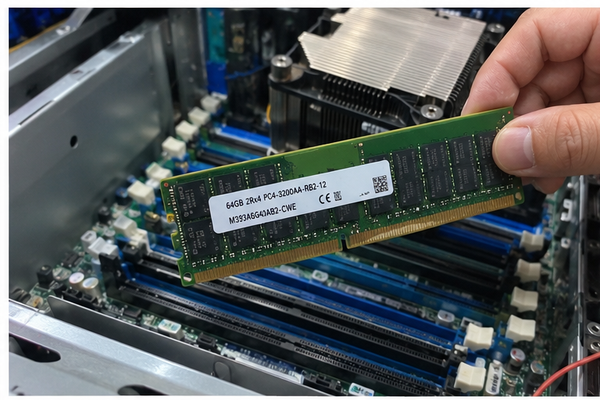
Balancing Memory Density, Rank Counts, and Bus Frequency
A common misstep I see in system integration tenders is over-specifying rank count without consulting CPU platform memory population guidelines. Every physical memory module presents one, two, four, or eight "ranks" (64-bit wide data blocks) to the processor's memory bus.
When you populate multiple quad-rank or dual-rank modules on a single memory channel (DPC: DIMMs Per Channel), electrical capacitance increases dramatically. To maintain bus signal integrity, the memory controller in processors like AMD EPYC or Intel Xeon automatically reduces the operating frequency.
- 1 DPC (One DIMM per Channel): Runs at peak theoretical frequency (e.g., DDR5-4800 or DDR5-5600) with clean electrical signaling.
- 2 DPC (Two DIMMs per Channel): Often steps down the memory bus clock by 400 MT/s to 800 MT/s depending on CPU silicon generation.
- Rank Multiplication: LRDIMMs mitigate this by using specialized buffer chipsets that present multi-rank dies as a single physical load to the controller, preserving frequency at the expense of slight memory latency increases.
Memory Bus Trade-Off:
Higher Module Density ──> Multi-Rank Capacitance ──> Frequency Step-Down (Lower GB/s)
Single-Rank Modules   ──> Minimal Bus Loading    ──> Maximum Clock Speed (Peak Throughput)
Chassis-Level Thermal Penalties
High-capacity memory modules also introduce thermal bottlenecks in dense server chassis. A high-density 128GB or 256GB LRDIMM contains stacked dies (such as 3DS DDP) and a centralized memory buffer register. These components generate substantial local heat.
In enterprise 1U storage nodes or 2U high-density GPU platforms, restricted chassis airflow can cause dense memory arrays to reach thermal thresholds quickly. When DIMM temperature sensors register critical heat levels, the platform enters thermal throttling, injecting idle cycles into the memory bus. If you buy high-density memory to boost performance without planning for fan curves, ducting, and power delivery, you end up with a slower platform.
Which server ram grades match your deployment risk profile?
Procurement leads often struggle to determine when expensive, high-reliability memory architectures are technically necessary. Overspending on mission-critical memory for secondary storage drains your budget, while deploying basic memory in production environments risks system crashes. Aligning memory error tolerance with workload downtime costs prevents costly misallocations of capital.
Selecting proper server ram grades requires mapping your workload downtime cost against error correction tiers, where mission-critical virtualization clusters mandate RDIMMs with advanced multi-bit Chipkill detection, while distributed edge microservers or cold-storage nodes operate cost-effectively using basic unbuffered ECC modules.
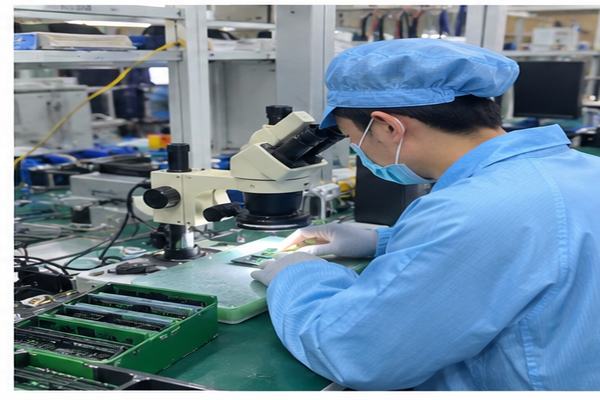
Error Mitigation: From Standard ECC to Advanced Chipkill
Enterprise reliability requires understanding the differences in hardware error mitigation. Standard Error-Correcting Code (ECC) uses extra parity bits (8 bits per 64-bit bus) to detect and correct single-bit memory errors on the fly. When a single electrical charge flips in a DRAM cell due to cosmic radiation or voltage variations, standard ECC corrects it without interrupting system operations.
However, standard single-bit ECC crashes the operating system with a Kernel Panic or Blue Screen when encountering a multi-bit failure within the same word. For mission-critical databases and financial transaction nodes, standard ECC is insufficient.
Advanced memory architectures support multi-device fault tolerance, commonly referred to as Chipkill (or Advanced Device Correction):
Engineering Principle: Chipkill scatters memory data bits across multiple distinct physical DRAM chips on the DIMM. If an entire DRAM chip suffers catastrophic electrical failure, the memory subsystem reconstructs the lost data from the remaining functional chips, preventing kernel panics and allowing scheduled hardware replacement.
Workload Risk Profiling Framework
To optimize hardware spend across your infrastructure, match memory architecture directly to your service level agreements:
Workload Tiers & Architecture:
├── Tier 1 (Mission-Critical): RDIMM / LRDIMM + Chipkill + Binned Silicon
├── Tier 2 (General Enterprise): Standard RDIMM + High-MTBF Screening
└── Tier 3 (Cold Storage/Edge): Entry ECC UDIMM / Density-Optimized RDIMM- Mission-Critical Virtualization & Core Databases: Mandates tier-1 binned RDIMMs or LRDIMMs featuring Advanced ECC/Chipkill support. A single hour of downtime in these environments often exceeds the entire hardware acquisition cost of the server cluster.
- Web Serving & General Enterprise Clusters: Operates efficiently on standard tier-1 manufacturer RDIMMs. Multi-node load balancers provide software-level redundancy, allowing hardware teams to optimize for module cost-per-gigabyte over extreme fault-tolerant memory architectures.
- Cold Storage & Edge Microservers: Best served by density-optimized RDIMMs or entry-level ECC UDIMMs. Because these nodes prioritize sequential I/O and low baseline power, you can eliminate the price premium of specialized multi-buffered architectures.
Frequently Asked Questions
Can you mix different server ram grades in the same server?
You cannot mix unbuffered (UDIMM), registered (RDIMM), and load-reduced (LRDIMM) modules within the same server system. Modern server motherboards and memory controllers support only one buffering topology per socket. Mixing these memory types triggers immediate BIOS POST initialization failures and halts system booting.
What is the difference between ECC UDIMM and RDIMM?
ECC UDIMMs connect memory chips directly to the host CPU memory controller, limiting density to one or two modules per channel. RDIMMs incorporate a dedicated hardware register on the module to buffer address and command lines, reducing bus electrical load and enabling higher memory capacity.
Does DDR5 change how server memory grades are evaluated?
DDR5 introduces on-die ECC directly onto every standard memory chip to manage internal cell density risks. However, enterprise server DDR5 modules still require sideband bus-level ECC, registered buffers, and on-module Power Management ICs (PMICs), making architectural selection and vendor silicon binning just as vital as with DDR4.
Why does memory speed drop after installing all DIMM slots?
Populating all DIMM slots introduces significant electrical capacitance and bus trace noise on the memory channel. To protect data integrity and avoid bus parity errors, the server CPU memory controller automatically down-clocks operational memory frequency to safe, platform-tested signaling limits.
Conclusion
Understanding server ram grades requires moving past arbitrary supplier quality labels and evaluating verified silicon architectures, module buffering types, and chassis-level workload demands. Selecting the right memory is an operational trade-off between bus topology, thermal dissipation, and application uptime cost. Over-provisioning density without evaluating rank limits reduces system throughput, while cutting corners on unverified gray-market silicon introduces silent data corruption risks.
As an OEM/ODM hardware manufacturing partner, we help global system integrators and data center operators configure balanced, validated server platforms from bare metal up. Contact our engineering team today to review your custom server specifications and secure stable enterprise hardware delivery.
发表回复